Overview
- Close to Nature
- Terelj Village
- An Eagle Hunter
- Khustai National Park
- Kharkhorin
- Orkhon Valley
- Into the Gobi Dessert
- Camels and Flaming Cliffs
- Yol Valley
- Ulaanbaatar
Close to Nature
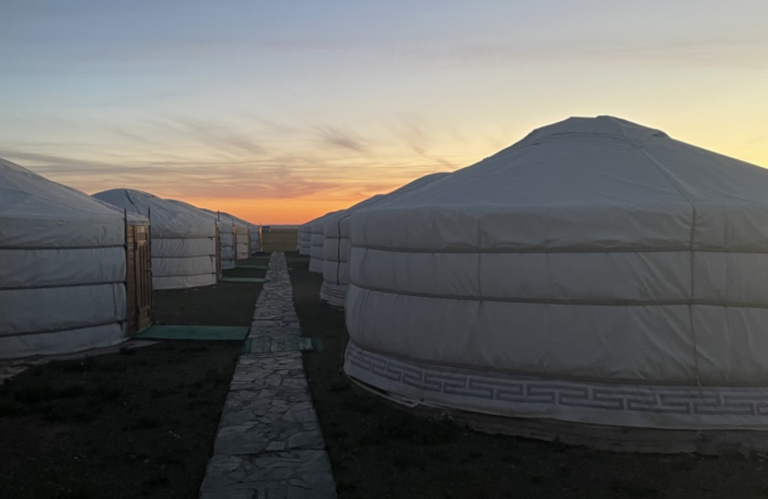
The herders have an intrinsic knowledge of their environment, from the mountains and valley grasslands to the snow and rivers. Sleeping in a Ger centres you in the natural world. One of our most amazing experiences was waking before dawn in the desert and watching the sun rise over the vast expanse. Our felt-covered, wood-framed Gers had simple amenities, although we did have the luxury of ensuite bathrooms and toilets throughout the tour.
Terelj Village
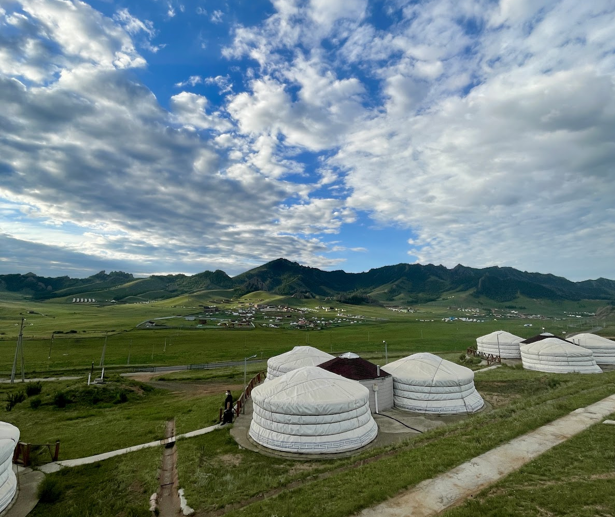
After a very early arrival we were transferred directly to Terelj National Park, a place of beautiful landscape, polka-dotted by Ger camps. We visited Aryabal Temple, a peaceful place of meditation, and in the afternoon, we experienced a traditional tea ceremony accompanied by a dance performed by one of the delightful staff members.
The next day we drove out to the monumental statue of Chinggis Khaan, (Genghis Khan in the West). He is revered as the founding father of the nation, having unified the nomadic tribes in 1206 CE and established the vast Mongol Empire. The 40-metre-high statue portrays the fearless leader on horseback, and we climbed to the top for panoramic views over the mountainous landscape. After exploring the small museum, we continued to the nearby Nalaikh District for a special lunch with the locals.
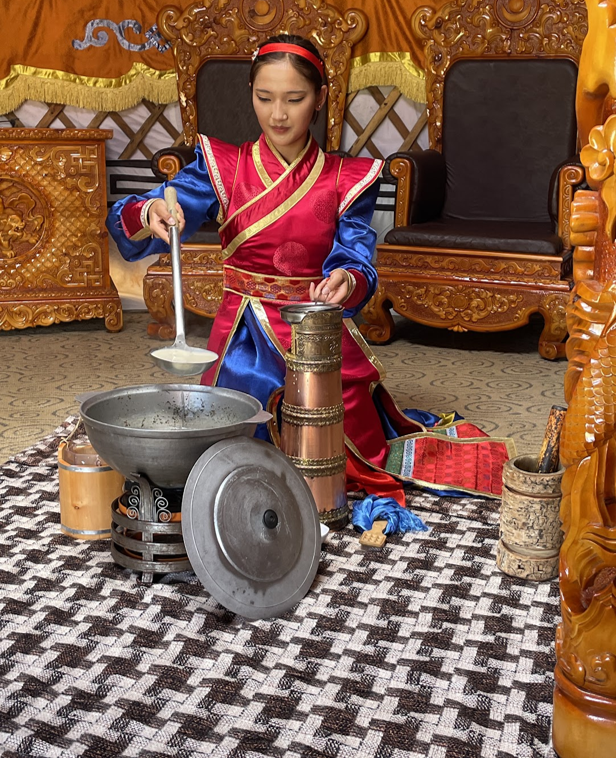
Traditional tea ceremony, Aryabal Temple
An Eagle Hunter
We were then welcomed into the home of an eagle hunter. Golden Eagles are central to the living heritage of the Kazakh people, and we learned about the noble art of eagle training from our host. He is also a movie stuntman and competitor in traditional Mongolian sports.
His ability to shoot an arrow from a galloping horse must be seen to be believed. Almost as impressive was his daughter’s relationship with her pet falcon!
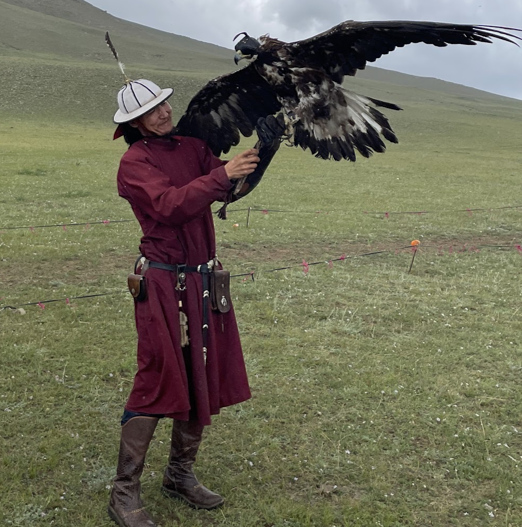
Eagle hunter
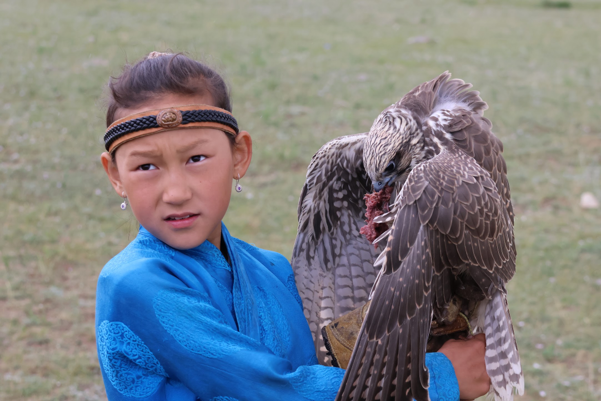
Eagle hunter's daughter and her falcon
Khustai National Park
Our next journey began on Ulaanbaatar's local train to Emeelt station. We shared a lively ride with the locals, along with a seat and a cup of tea.
Our driver was waiting to take us on to Khustai National Park, home to the extremely rare Przewalski's Horse, or Takhi. Considered the world's last truly wild horse, the Takhi was brought back from the brink of extinction and re-established in Mongolia in 1992.
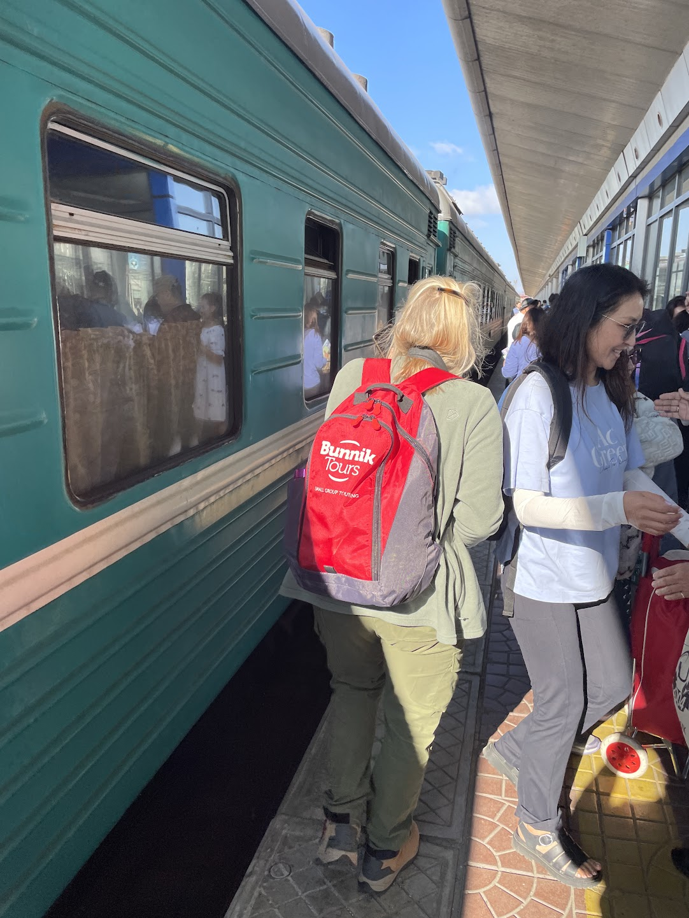
Local train, Ulaanbaatar
Erdenezuu Monastery, Kharkhorin
Kharkhorin
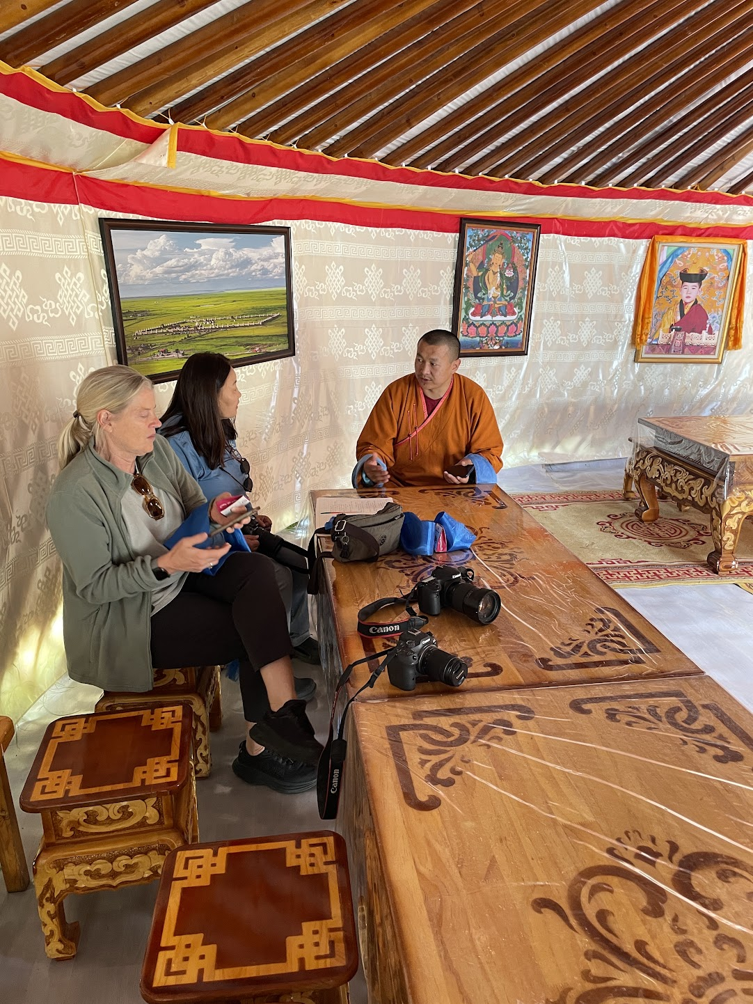
In the morning we set out for the ancient capital of Kharkhorin, nestled in the Övörkhangai Province. It was a long drive, but the scenery was beautiful. Here we explored Mongolia's spiritual roots at the Erdenezuu Monastery, the country's oldest surviving Buddhist temple complex. The site is still an active place of worship for locals and resident monks, and we toured the grounds and met a local lama, a spiritual Buddhist teacher.
Orkhon Valley
After lunch we made our way to the beautiful Orkhon Valley. Along the way we stopped at the cliffside viewpoint of Uurtiin Tokhoi overlooking the Orkhon River canyon with sweeping vistas of the valley below.
We continued to the historical burial site of Temeen Chuluut, famous for its square-shaped tombs and early engravings of deer, elk and other nomadic symbols.
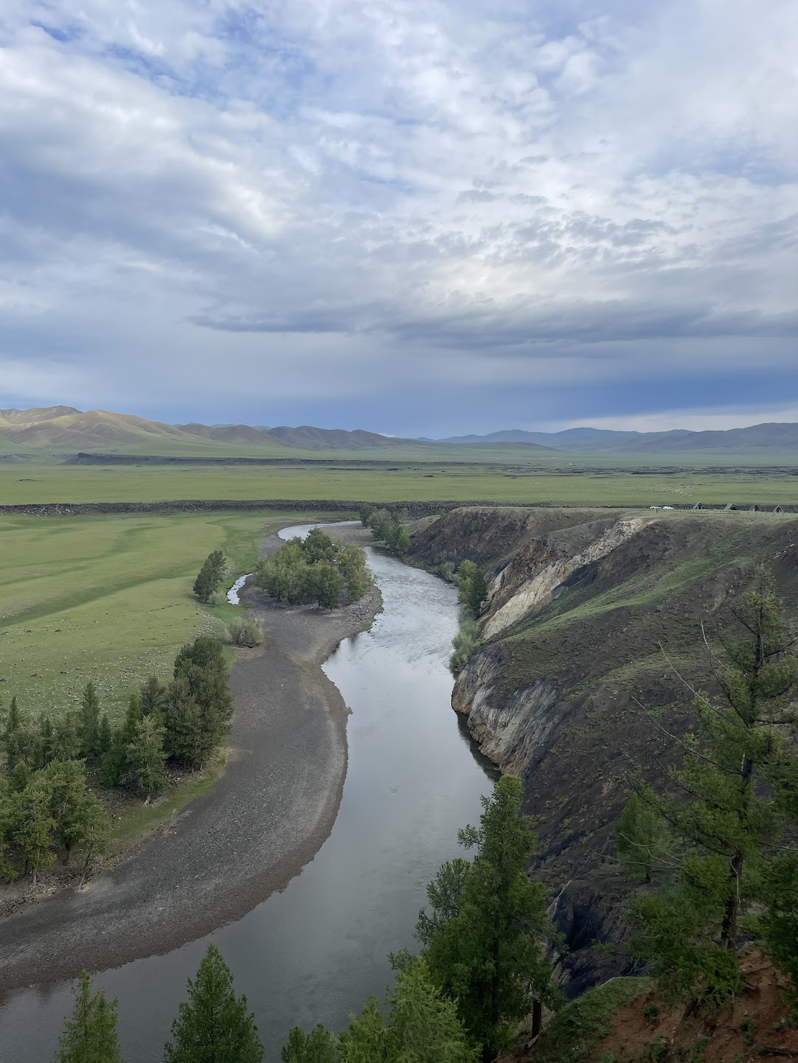
Orkhon River canyon
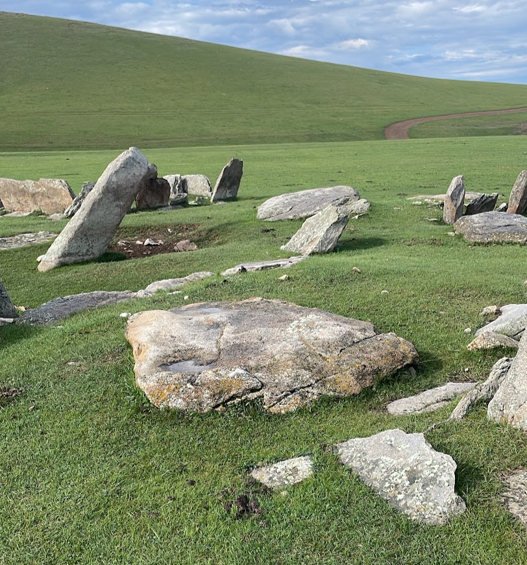
Burial site of Temeen Chuluut
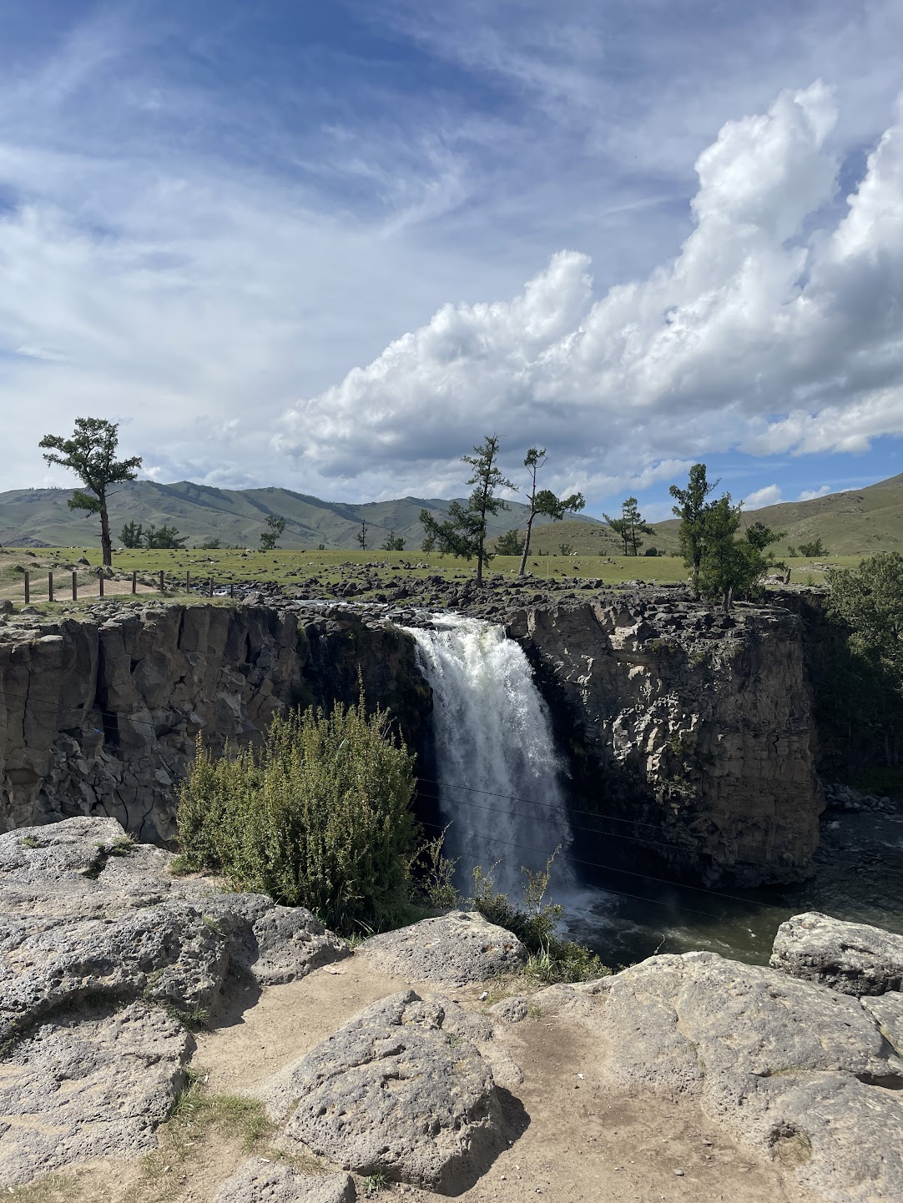
The Orkhon Waterfall
The valley itself was a vast expanse of green fields dotted with herds of free-roaming animals. We had our first Yak sighting! The Orkhon Waterfall is worth the pleasant walk from the Lodge.
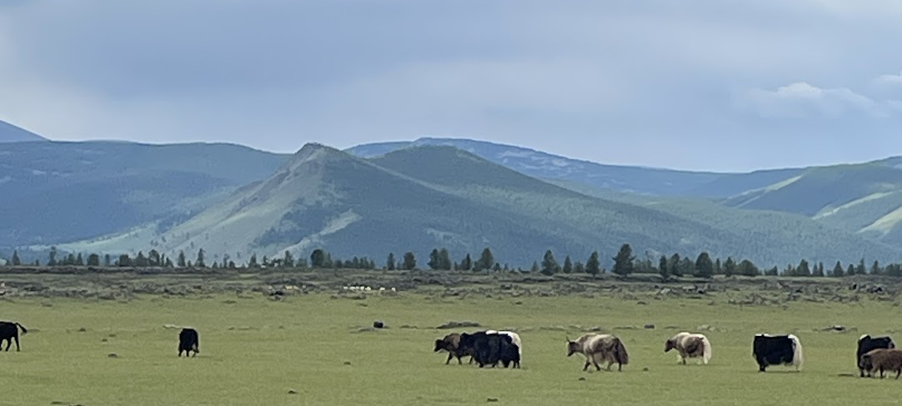
Orkhon Valley
Dinner that night was unique: Mongolian hotpot, cooked on an original stove inside a Ger, where lava stones were heated to infuse the delicacies with their distinctive flavour.
We began the next day early to experience a morning in the life of a local herder family. The nomadic herders of the Orkhon Valley tend horses, cattle, sheep and yaks, and have followed this ancient pastoral lifestyle for thousands of years. We tasted homemade cheese, dried curds, yak butter and even yak vodka. We also tried yak milking, which is not as easy as it looks, as yaks have surprisingly small teats.
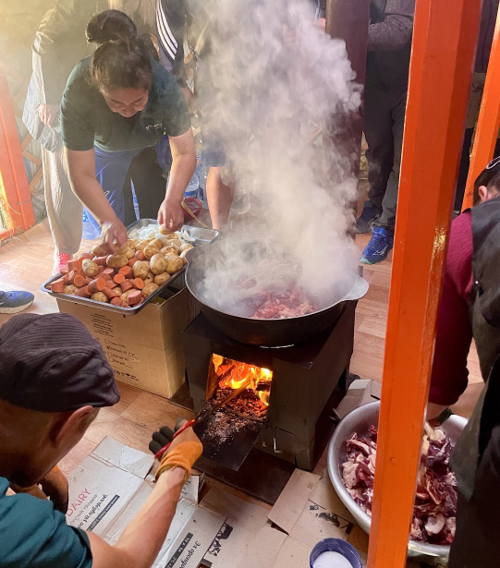
Mongolian hotpot
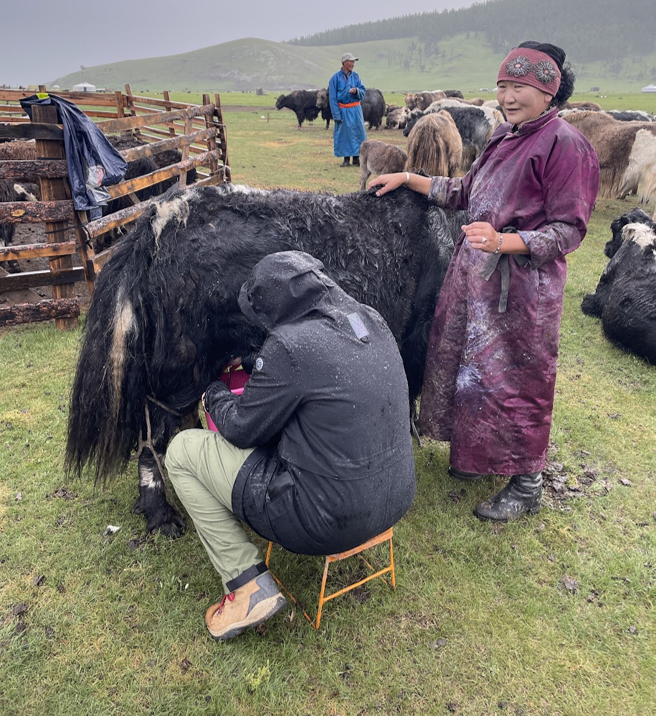
Local herder family
Into the Gobi Dessert
We farewelled the Orkhon Valley and set off across the open steppe toward the vast and rocky plains of the Gobi Desert. Spanning over a million square kilometres, the Gobi stretches across both China and Mongolia, and almost all the terrain we crossed was bare rock, gravel plains and firm ground, rather than sand dunes. We had an overnight stop in the Middle Gobi then after breakfast our adventure continued south into the heart of the Desert.
The Dream Gobi Lodge was a wonderful place to stay. The staff had a delightful ritual of farewelling us at the gate when we left on excursions and greeting us there with a welcome drink, always with a smile. As well as enjoying their hospitality we practised assembling a Ger and tried our hand at Mongolian archery with some surprising success (we had expert guidance!)
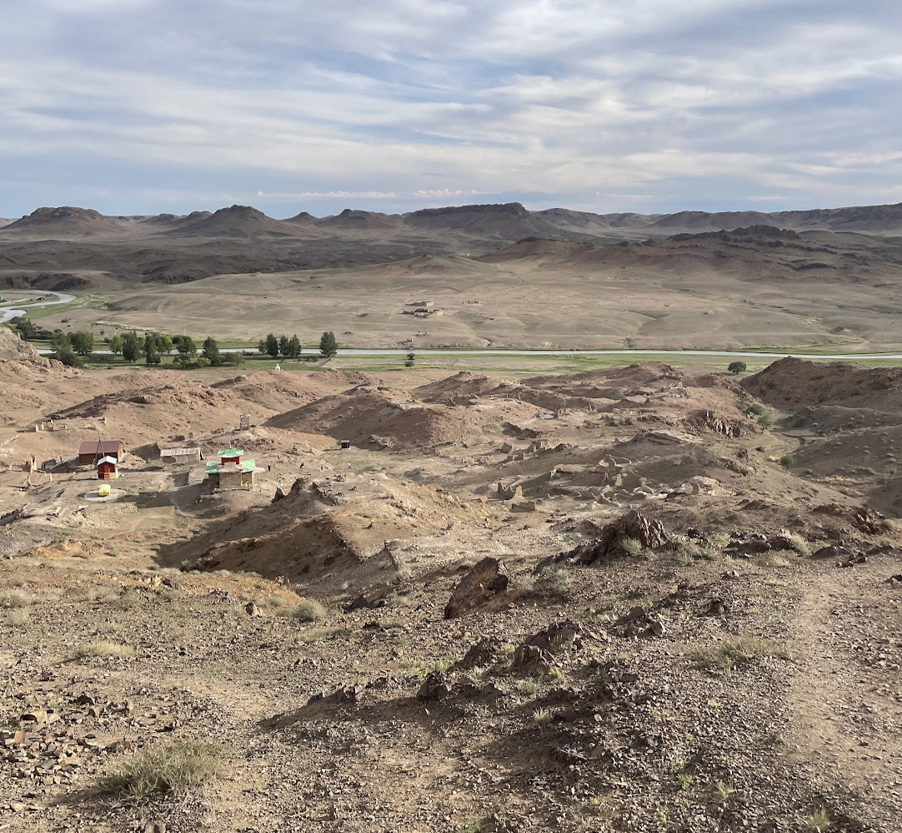
Gobi Dessert
Camels and Flaming Cliffs
We ventured to a local family's home nestled near the Moltsog Sand Dunes. Two-humped Bactrian camels have called the desert home for thousands of years, supplying herders with transport, nutrient-rich milk and wool for textiles. We enjoyed a ride and even sampled some camel milk vodka. Back at Dream Gobi we had a refreshing swim before heading out to the Flaming Cliffs.
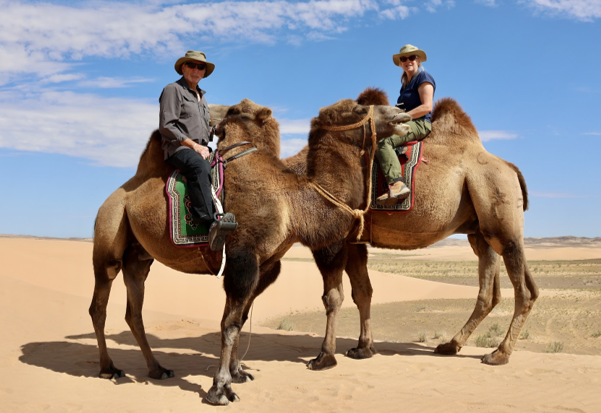
Two-humped Bactrian camels
This world-renowned palaeontological site is famous for its distinctive red sandstone formations and dinosaur fossils. American explorer and naturalist Roy Chapman Andrews discovered the first known fossilised dinosaur eggs here during his 1920s expedition. We finished the day with delightful sunset drinks overlooking the valley.
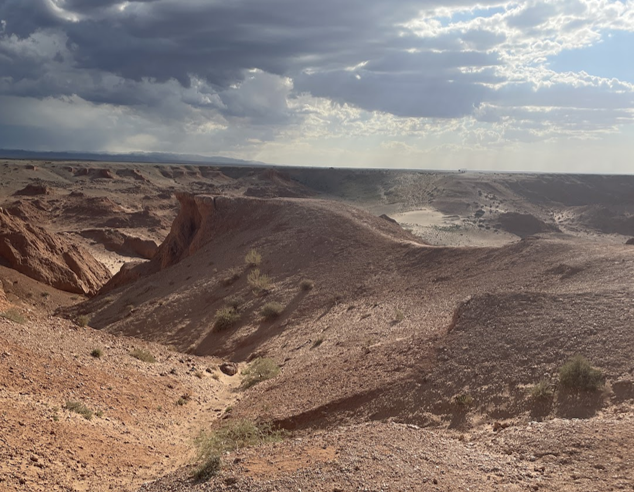
Flaming Cliffs, Gobi Desert
 Yol Valley
Rising early from our desert ger, after breakfast we enjoyed a relaxed hike in the Yol Valley, following a narrow stream that snakes through the Gurvan Saikhan Mountains.
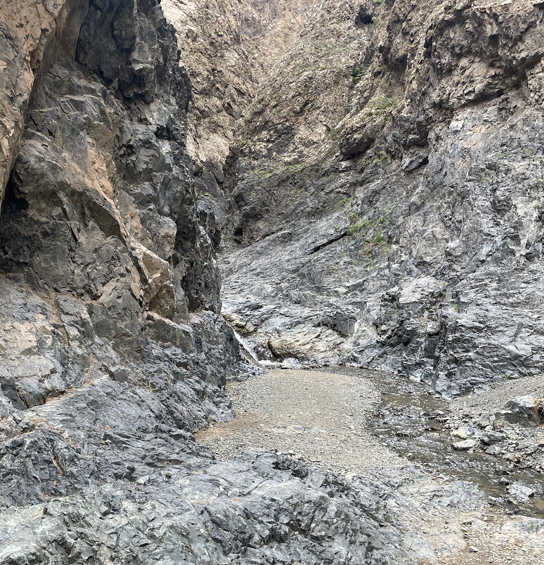
Gurvan Saikhan Mountains, Yol Valley
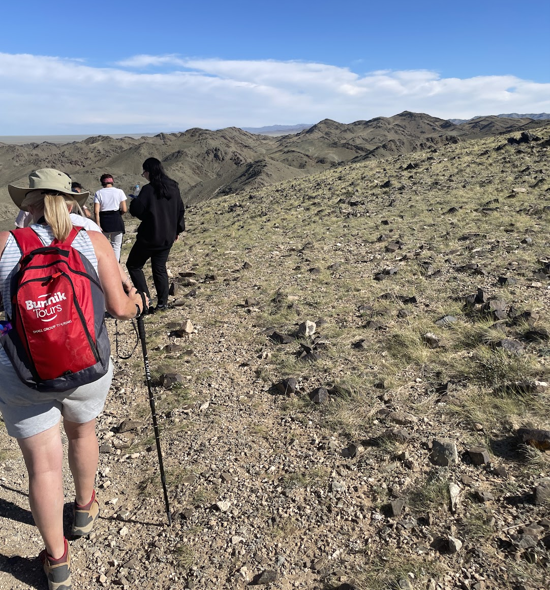
Khavtsgait Hills, Yol Valley
We also walked to the Khavtsgait Hills with the staff from the Lodge in search of ancient petroglyphs created by the prehistoric inhabitants of the region.
Our last stop in the Gobi was the Museum of Nature and History, which showcased the rich biodiversity and nomadic heritage of the desert.
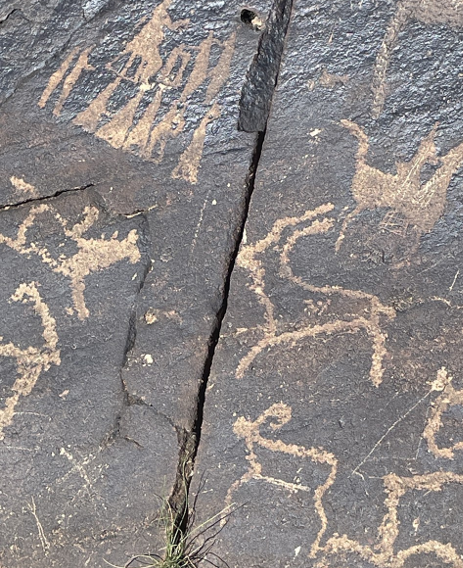
Ancient petroglyphs
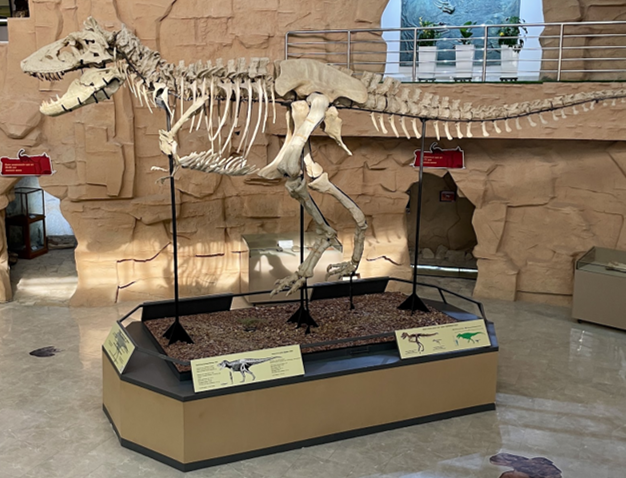
Museum of Nature and History, Gobi
Ulaanbaatar
Back in the capital, we walked to the National University of Mongolia, where we met a university professor. This fascinating exchange gave us a deeper understanding of the country's contemporary culture, education and society. We also visited a special workshop dedicated to the crafting of the Morin Khuur, the horsehead fiddle. It was a hands-on experience as we attempted to make music from the traditional Mongolian instruments. The sips of Airag (made from fermented mare’s milk) made everything sound and feel warmer.
Lunch was at the Bull Hotpot Restaurant, a magnificent spread of Mongolian flavours.
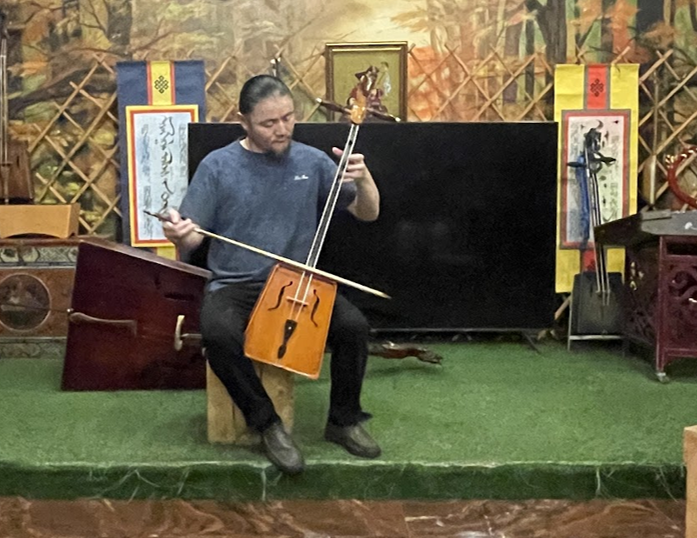
Morin Khuur workshop
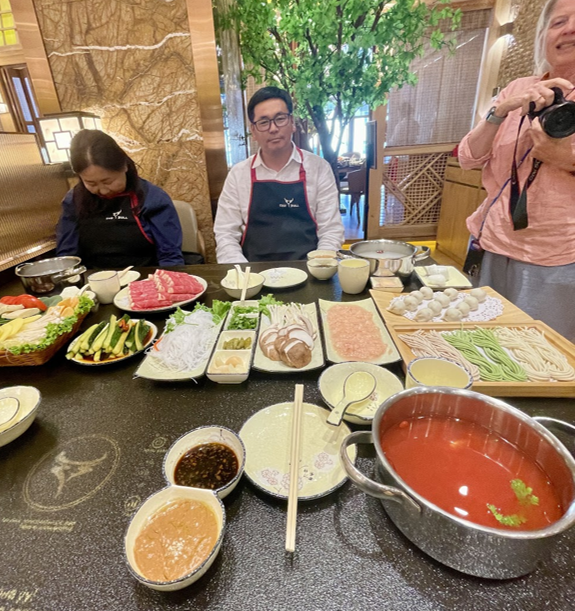
Bull Hotpot Restaurant
As the day wound down, we took a walking tour of the city's main sights, including the Government Palace and Sükhbaatar Square.
Our final night was a farewell dinner and a spectacular folklore show featuring throat singing, acrobatics, traditional dances and live music.
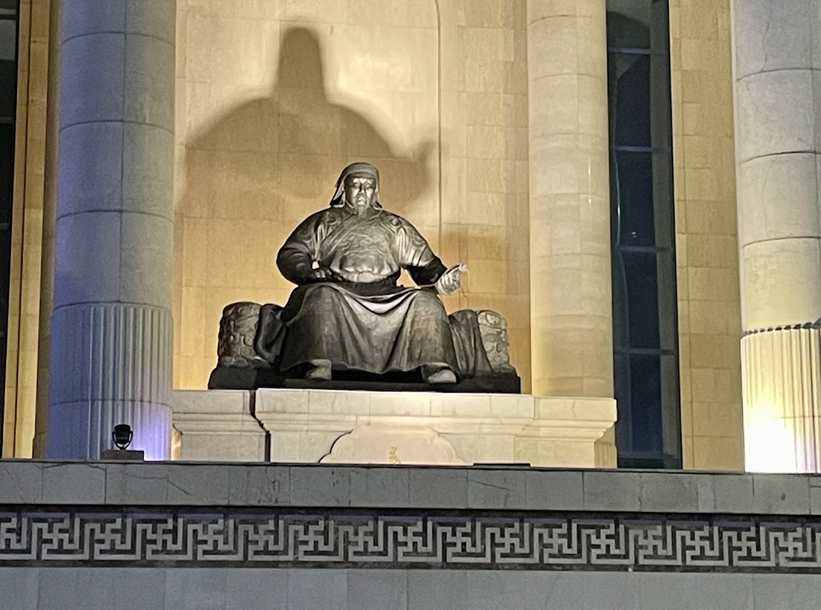
Statue of Genghis Khan, Government Palace, Ulaanbaatar
Food, Coffee and Final Thoughts
Mongolian food is meat-centric, although we managed to enjoy several wonderful vegetarian meals. The ingenuity of the cooks was outstanding, and in the Gobi we had some of the most delicious handmade cookies imaginable. We were also surprised by the quality of the coffee and the availability of other beverages. We will never forget the spectacular landscape and the wonderful people of Mongolia.
Discover more about this extraordinary destination on our Mongolian Explorer tour and learn about the landscapes, culture and history that make Mongolia such a distinctive part of the world.