Iceland is like stepping into another world where mother nature shows off her wild side in the best possible way. Picture towering glaciers, snowy plains and steaming hot springs all in one jaw-dropping landscape. A land of wild contrasts… volcanoes that rumble, northern lights that dazzle and cosy coastal villages with iconic black sand beaches and magical ice caves. Soak in geothermal bliss, spot curious Arctic wildlife and chase waterfalls straight out of a fantasy film, and just when you think you could live off-grid forever, there’s Reykjavik, ready to charm you. Discover, and savour, everything Icelandic on a Bunnik Tours holiday – book one of our small group tours online today or get in contact with one of our friendly travel specialists.
Small Group Tours
Discover Iceland
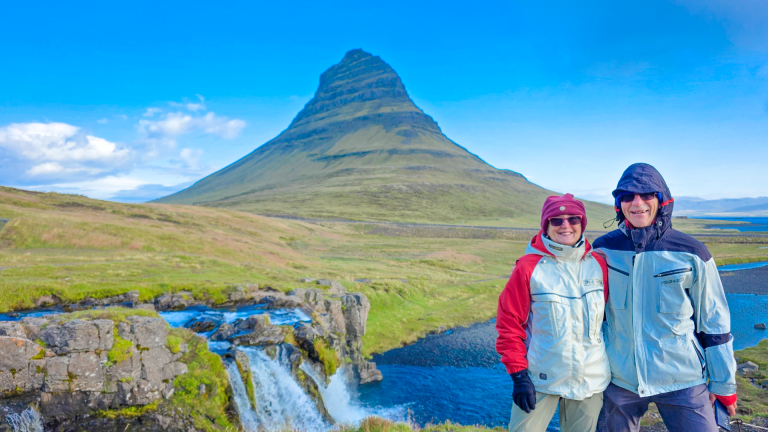
Discover the land of fire and ice on an adventure through Iceland.
Iceland Facts & Tips


Did you know?
- Iceland sits on the Mid-Atlantic Ridge and is one of the most volcanically active countries in the world. It is also home to Vatnajökull, Europe's largest glacier.
- Hekla is one of Iceland’s most active volcanoes (this is also one of the most popular girls’ names in Iceland).
- Aurora Borealis (the spectacular phenomenon of the Northern Lights) can be seen during winter (between late August and mid-April) on clear, dark nights.
- In the telephone book, everyone is listed by his or her first name.
- The arctic fox is the only native land mammal in Iceland.
- Icelandic folklore includes stories of elves and hidden people, which remain an important part of the country's cultural heritage. In fact, roads have been re-routed and buildings re-designed to avoid rocks where elves are said to have lived.
- Volcanic activity provides Iceland with a natural source of geothermal warming –natural hot water is used to heat 90% of buildings in Iceland.
Visas & Passports
Australian passport holders travelling to Iceland do not need a visa at this time.
We require that your passport is valid for travel for at least six months from the date you are planning to return to Australia. Your passport must be valid to travel internationally and must be machine-readable. You also need to carry a valid return ticket on you.
Whether travelling on an Australian passport or the passport of another country, all travellers require visas for a number of countries, and it is your responsibility to secure what may be required before departing Australia. You can consult with your travel agent, but it is also recommended that you check the foreign embassy website for your respective destination as it can also provide you with useful information.
The Australian Embassy in Denmark is responsible for Iceland:
Dampfaergevej 26, 2nd floor
Copenhagen 2100
Ph. +45 7026 3676
Fax. +45 7026 3686
Currency
The recommended currency to take to Iceland is the Icelandic Krona. Icelandic Krona is issued in denominations of 10,000, 5,000, 2,000, 1,000 and 500 krónur.
Ensure you change a small amount into small denominations.
Iceland is one of the most cashless countries in the world, with cards accepted almost everywhere. Make sure you have a travel card with you for use at all shops, markets and even public toilets!
Advise your bank of your travel plans so that they can make a note of it. Otherwise they may cancel your credit card as a safety measure due to the overseas transactions. Also make a note of the 24-hour emergency contact number of the bank or building society which issued your credit card in the unlikely event that your card is lost or stolen.
Whenever possible use ATMs when the banks are open (Mon – Fri) so that if a machine ‘eats’ your card you can then deal with it straight away. It is always advisable to carry a supply of cash in addition to your credit card. Be sure to retrieve your credit/debit card before walking away from the ATM as cash is often dispensed before the card.
We advise that you exchange some money into the local currency at the airport even if the exchange rate is not the best, this way you’ll have money to get a drink, snack or give a tip during those first few hours of arrival. Your guide will be able to advise you on where the best places are to exchange money.
Dining
- The price of a cappuccino in Reykjavik is approximately kr 630-780
- The price of an inexpensive lunch is approximately kr 2,500-3,500
- The price of dinner in a moderately-priced restaurant is approximately kr 5,000-7,000
- The price of a beer in a local pub is approximately kr 1,100-1,700
Due to its isolation, many of Iceland’s dishes revolve around fish, lamb and dairy products. As a consequence of their isolation and climate, fresh fruit and vegetables are not generally used as part of the meal, although this is slowly changing. Some traditional dishes include hykarl (cured shark) and singed sheep’s head and black pudding. Puffin birds are also considered a delicacy that is cooked by broiling. Cod, haddock, salmon, herring and halibut are the most widely used seafood. Potatoes, cabbage, green beans and rye bread are generally served with main meals. Coffee is the most popular drink, however, Coca Cola is also widely consumed. In fact, Iceland is the world’s largest Coca Cola consumer per capita. Among alcoholic beverages, the most popular is Brennivin (which literally translates to burnt wine) and is a type of vodka.
Important: When dining at buffets (i.e. breakfast) please refrain from taking food away with you to ‘save’ for later! If you feel that you’ll need snacks between meals, pack some dried fruit, nuts, muesli bars etc.
If you have specific food allergies and/or preferences, we highly recommend you take every precaution before your tour, including carrying a small card with your food allergy listed in each language of every country you are travelling to show to table staff when ordering. Whilst we take all dietary requirements seriously, due to the serious nature of potential allergic reactions, it is your responsibility to be as prepared as possible.
Weather
Iceland’s climate is classified as ‘subpolar oceanic’. This means that the warmer North Atlantic current has a warming effect on the temperature in Iceland. It is generally warmer here than in other places of a similar latitude. Having said that, temperatures range from 0 degrees celsius during the winter months to a high summer temperature of 13-14 degrees celsius.
Getting Around
Want to get out and explore on your own?
Iceland does not have a railway system, but buses travel all over the country. Walking and cycling offer a fantastic way to get around cities and towns, although keep an eye on the weather, as it can change quickly and you may find yourself in an unexpected downpour.
When catching taxis, have small change on you and choose one with a meter, if it doesn’t have one then negotiate the price before getting in. Also, ask your guide or hotel staff the names of reputable taxi companies.
Shopping
So, you’d love to bring home a special souvenir from Iceland…
Iceland is not known as a big shopping destination, but local souvenirs worth investigating include hand knitted items, whether it be a scarf or sweater; items made from the volcanic leftovers and handcrafted silver jewellery. Another great souvenir idea is any of the Blue Lagoon spa products. Also Icelandic vodka seems a big hit to bring home.
Please remember to always declare all your purchases with customs when arriving back in Australia.
Local Etiquette
- Tipping is not expected in Iceland.
- Generally, Icelanders love to talk about the weather.
- They are usually fairly easy-going people and never having had an ‘upper class’ system, there is little formality.
- At public pools and lagoons you must shower thoroughly, without swimwear, before entering.
Celebrations & Public Holidays
First Day of Summer
The First Day of Summer has been a public holiday since 1971, but its history goes back further to when Icelanders used the Old Norse calendar which was divided into just two seasons: Summer and Winter.
Although the weather can be notoriously bad on the First Day of Summer, Icelanders still celebrate with parades, outdoor sporting events and live entertainment all over the country. There is an old superstition that if the temperature drops below zero the night before Sumardagurinn fyrsti, it is a favourable sign for a fair summer to come. Parents give children a summer gift, an Icelandic tradition which is 400-years older than the custom of giving presents at Christmas.
Independence Day
Chosen for the birthday of the nation's champion for autonomy, Jón Sigurðsson, June 17th marks the anniversary of Iceland's independence from Denmark in 1944. People flock to downtown Reykjavik to watch the parade and outdoor concerts. The annual 'Lady of the Mountain' is crowned as part of the parade and she symbolises the Icelandic spirit and nature, especially in the context of independence as a feminine resistance to the King of Denmark.
Other national public holidays to be aware of include:
- New Year’s Day
- Maundy Thursday (Thursday before Easter)
- Good Friday
- Easter Sunday and Easter Monday
- First Day of Summer (mid-to-late April)
- Labour Day (May 1st)
- Ascension Day (40 days after Easter)
- Iceland Republic Day (June 17th)
- Commerce Day (First Monday in August)
- Christmas Eve
- Christmas Day
- Boxing Day
- New Year’s Eve


Iceland FAQs
Are tours in Iceland worth it?
Absolutely! Iceland small group tours are the best way to visit all the main attractions and get added benefits, such as staying in the best hotels and accommodation, local guides and included meals. At Bunnik Tours, we offer a 12 day land-only tour that starts at $13,295pp, as well as some independent travel packages where you can travel across the stunning landscapes of Greenland and Iceland.
How many days do you need in Iceland?
There is plenty to see and do in Iceland, so we highly recommend spending at least 1-2 weeks there. At Bunnik Tours, we offer a 12 day Discover Iceland small group tour, where you’ll explore the land of fire and ice. Think spotting humpback whales aboard a traditional Icelandic ship, soaking in geothermal baths, and looking on in awe at dramatic coastlines, volcanic peaks, thundering waterfalls and charming villages. If you have any questions about our all-inclusive Iceland trip, please don’t hesitate to get in touch with our friendly Travel Specialists!
What is the best month to visit Iceland?
The optimal times for an Iceland holiday are during the summer months (June-September) and winter months (December-March).
Summer in Iceland is when the days are the longest and the warmest. Popular summer activities include: volcano hiking, visiting the Gullfoss waterfall, visiting the Thingvellir national park, seeing the geysers, going on a golden circle tour, playing midnight golf during the midnight sun and more!
Can you see whales in Iceland?
Yes! Depending on the species, you can see whales all year round on an Iceland group tour. The most common species is the Minke whale, which will migrate towards the Icelandic waters in the summer months. Whales are shy creatures, but can be seen from whale watching ports. Humpback whales are another species that can be seen during summer, especially on an Iceland tour package.
How can I tour Iceland as a responsible traveller?
At Bunnik Tours, we believe in responsible travel and sustainable tourism. For more information, visit our Sustainable Tourism hub.
Can't find the answers you're looking for? Check out our FAQs.
Europe Destinations
Liechtenstein
Tiny yet captivating, Liechtenstein is an alpine gem of storybook villages, mountain scenery and timeless charm.
Lithuania
Relatively small, with only a hundred kilometres of Baltic coastline and hemmed in by Latvia, Belarus, Poland and part of the Russian Federation, Lithuania has a lot to offer visitors.
Malta
Otherwise known as the jewel of the Mediterranean, Malta is an island located off the Italian coast packed with stunning scenery and a rich culture.
Norway
Visit the cultural centre Sápmi Park in Karasjok, enjoy a walking tour of the Bryggen quarter in Bergen & explore the vibrant capital of Oslo.
Poland
Poland is a fascinating place to visit, with its modern outlook, booming economy and positive vibe, yet you’ll find reminders of its turbulent history at every corner.
Portugal
See stunning baroque churches and plaza in Braga, taste local sweets, discover colourful town houses in Aveiro and uncover intriguing history in Evora.
Slovenia
Slovenia is packed with unusual and often unique experiences, from primeval forests, Karst limestone caves and thermal springs to the lively and architecturally beautiful city of Ljubljana.
Spain
Fall in love with Spain’s intriguing history, marvel at the architectural wonders of Barcelona, enjoy a traditional Spanish tapas dinner and people-watch at a terrace café in Madrid.
Bunnik Reviews