The distinctive natural beauty draws many who visit Turkey, with irresistible elegant structures formed from rock, a fascinating Christian heritage and welcoming local residents.
Explore the cave dwellings, sleep in a cave hotel, ride a hot air balloon and learn how to prepare local cuisine — Cappadocia is a place to include on a trip to Turkey!
11 things to do in Cappadocia
While young travellers might be keen on the hiking and running trails around Cappadocia, there’s something to be said for immersing in the cultural heritage and natural beauty of a destination.
To make planning a Turkey itinerary easy, these are the best experiences to be had in Cappadocia, from eating and cooking to where to stay and how to support the local economy.
Stay in a cave hotel
Imagine waking up to views extending across a green valley where old buildings and gardens form a grid below tall trees. This is the experience of sleeping in a cave hotel in Cappadocia.
The rooms are cosy, warm and exotic, with Turkish textiles on the floor and walls. Outdoor seating areas offer views across town, which are ever so pretty at night when coloured lights illuminate the city. This romantic experience is one to include in Cappadocia!
Learn how Turkish carpets are made
The intricate designs of Turkish carpets are coveted all over the world as an emblem of luxury. Travelling with a small group provides the opportunity to go behind the scenes and learn how these wonderful creations are made and how different designs are used.
Learn about the natural colours used to give the threads the rich colour palette, how the silkworms begin the process, and the hand-weaving and stitching techniques. In Turkey, there are over 5000 looms dotted around the country.
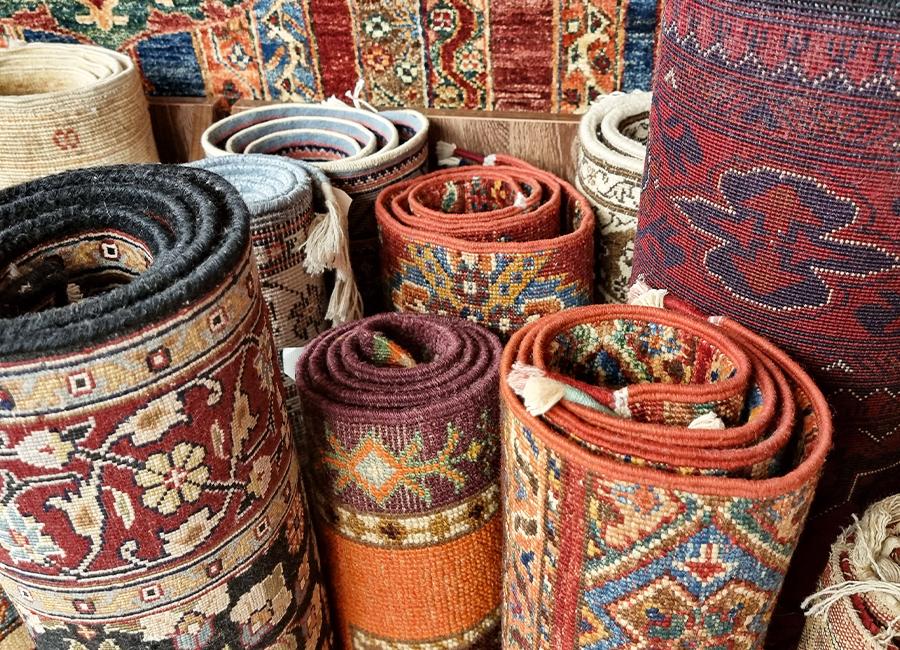 Carpets, Cappadocia, Turkey by Dennis Bunnik
Visit the fairy chimneys of the Goreme Valley
The Central Anatolia region is characterised by ‘tuff’, soft porous rock formed from hardened volcanic ash, later covered by a layer of harder basalt. The stunning, quirky ‘fairy chimneys’ of the Goreme Valley are geological formations known as ‘hoodoo’ created over centuries as wind and water eroded the softer tuff to form pillars of rock.
These otherworldly ‘fairy chimneys’ often have a mushroom-shaped cap formed by the basalt at the top, which protects the shapes from further erosion. Be sure to bring a camera to capture iconic photographs of this natural wonder and UNESCO World Heritage-listed Site.
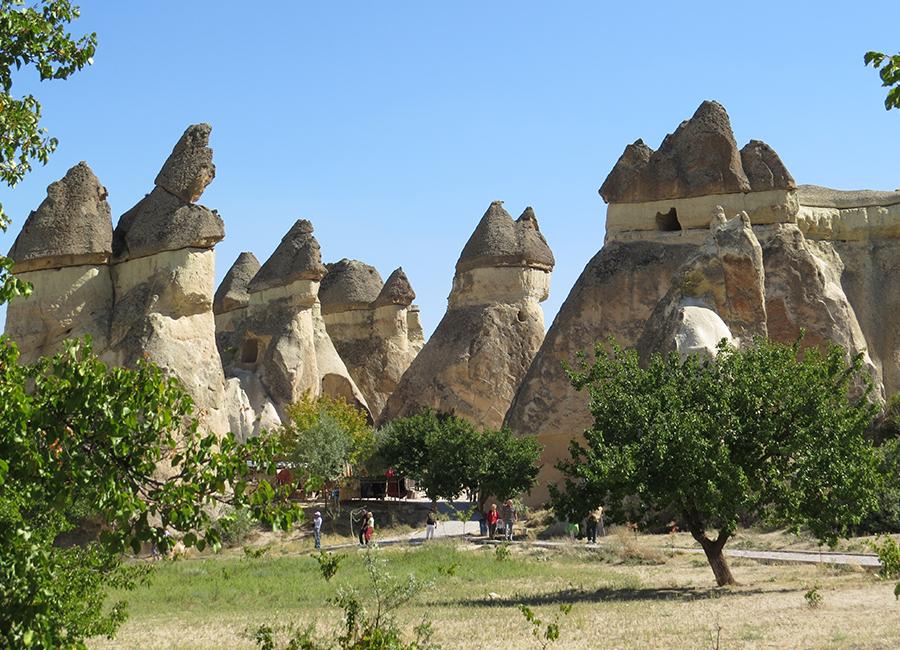 Fairy Chimneys, Goreme Valley, Turkey by Marion Bunnik
Connect with a local family
Wondering what it must be like to live in this fairytale location? Travelling with a small group opens up opportunities to connect with local people, like joining a family for dinner. Experiencing the hospitality, generosity and conversation in the home of a local couple or family provides memorable insights into the local culture today.
Visit the charming village of Avanos
Avanos is known for pottery making, an art practised here for over 4,000 years. Red clay from the Kizilirmak River is turned into vessels, crockery and other items. Pottery-making skills are passed from generation to generation in this town.
Workshops with ceramics in the windows and even decorating the stone walls and the ‘Red River’, the source of the town’s industry, flows under suspension bridges in the town. There is detail at every turn along the cobbled streets in the carved wooden doors and windows.
Try the local cuisine
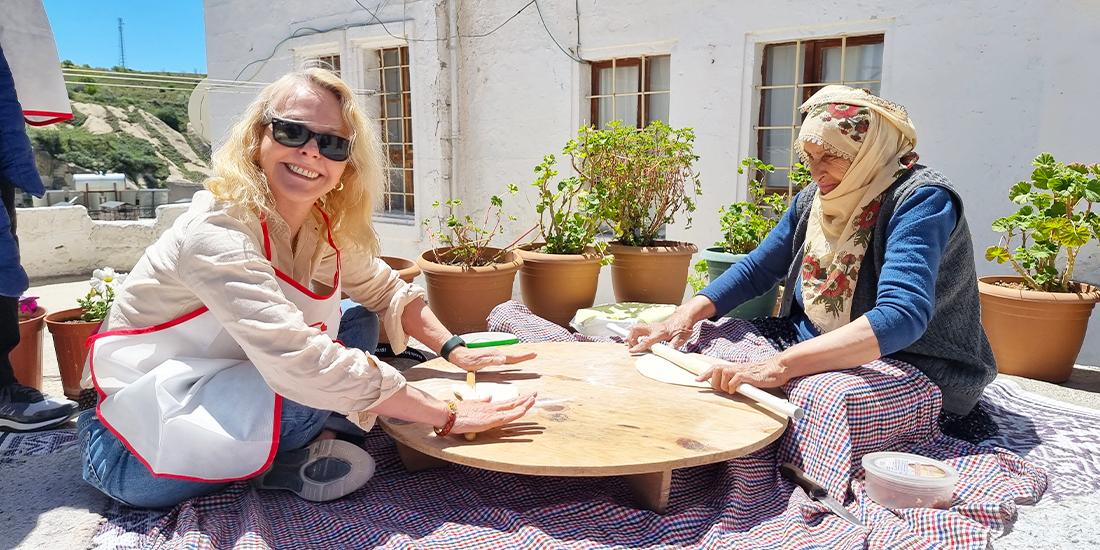 Cooking lunch in Fahriye, Turkey by Dennis Bunnik
The best way to satisfy an appetite gained from a day of sightseeing is to learn how to make the local dishes for yourself. A cooking class with a small group of travellers is fun, and a great way to learn skills to try later at home.
One dish local to the region is ‘manti’. These small dumplings are filled with a seasoned mixture of ground lamb or beef, onions and spices — a little bit like Italian ravioli.
Pottery kebab is another dish to try (look for this in Avanos). Meat and vegetables are slow-cooked in a sealed clay pot, which is cracked open to serve.
Explore Zelve’s Open Air Museum
Exploring an open air museum is an important way to appreciate the lifestyles of long-past communities in and around Cappadocia. Skip the crowded Goreme Open Air Museum and explore the quieter Zelve location to see where one of the largest communities in the region once called home.
Old paintings on the rocks show evidence of the Geyikili Kilise (Church with the Deer), which is now collapsed, displaying the Cross, deer and fish. There is also a monastery.
A metal ladder connects two valleys of the Open Air Museum. In this second valley, gentle paths connect the historic homes.
In the third valley are the Church with Grapes, the Church with Fishes, the town square and a sloped cave thought to be where the town gathered for important events.
Christians and Muslims lived here in harmony until 1934 when Christians left the valley during the exchange of minorities between Turkey and Greece. Eventually, erosion in the cave homes made living here too dangerous, and in the 1950s the community evacuated and formed a modern village nearby, ‘Yeni Zelve’ or the ‘New Zelve’.
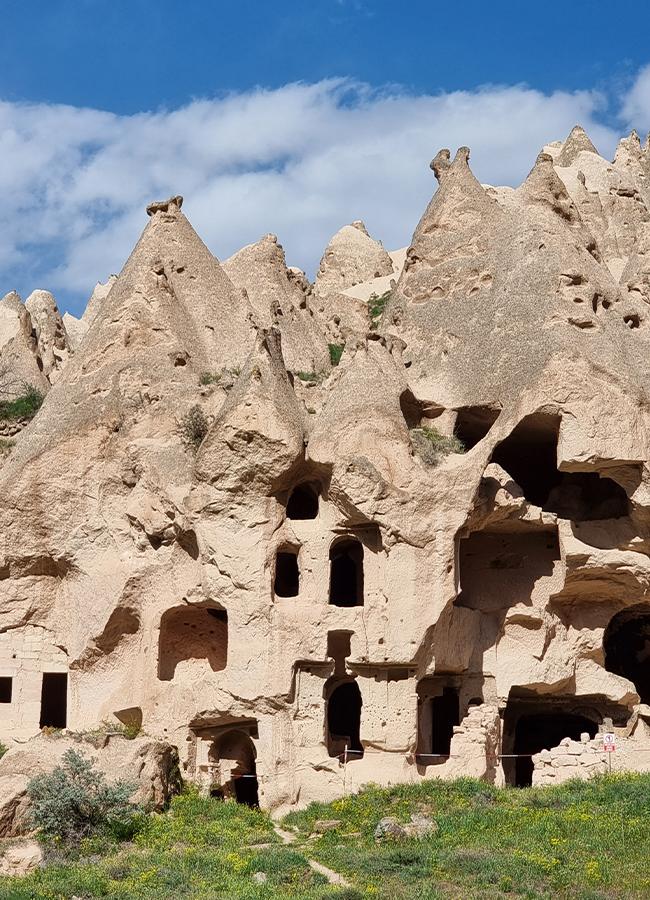 Zelve Open Air Museum, Turkey by Dennis Bunnik
Visit the hidden monastic village of Paşabaği
Seeking seclusion and isolation, hermits have resided in Pasabagi Valley for centuries. It’s said that the first was St Simeon in the 5th century, who, seeking respite from the many people coming to him for miracles, advice and healing, fled to a two-metre-high chimney in the valley and later to one that was 15m high.
Those living here cut shelters at the top of the cone-shaped rocks with stairs leading up and only came down to collect food and drink.
Ride in a hot air balloon over canyons and valleys
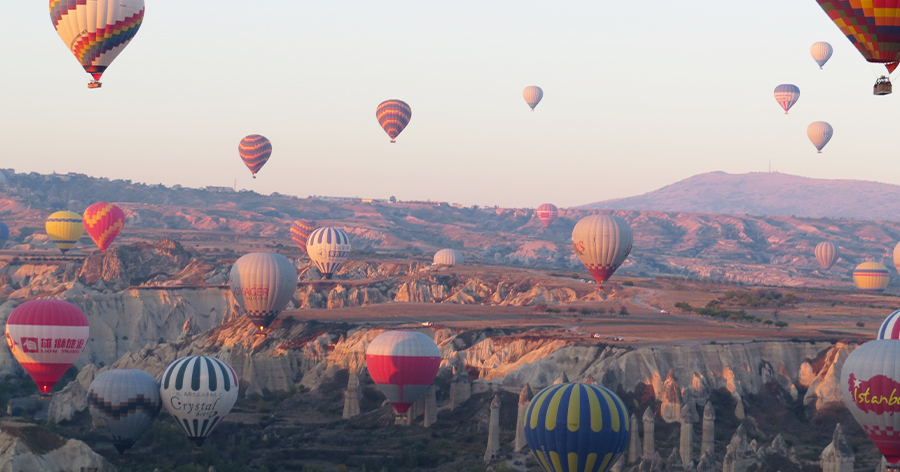 Cappadocia, Turkey by Marion Bunnik
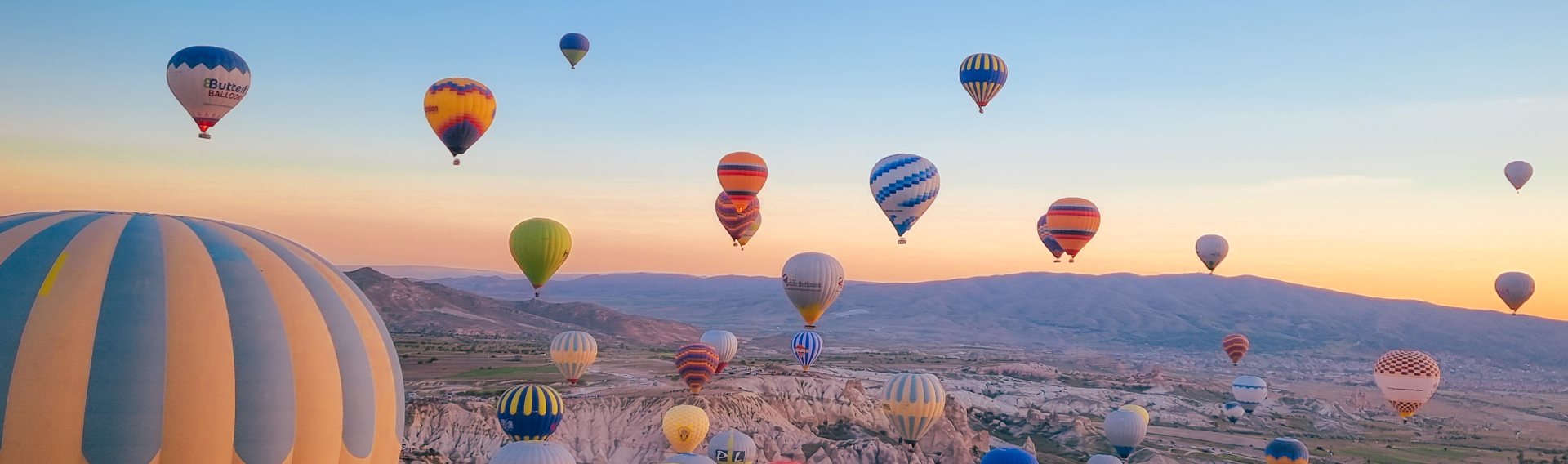
This is an experience like no other — surrounded by some 200 other hot air balloons (weather permitting). With views across the fascinating landscape, it’s a delightful experience and a new perspective on this fascinating location.
See the beautiful Ihlara Valley
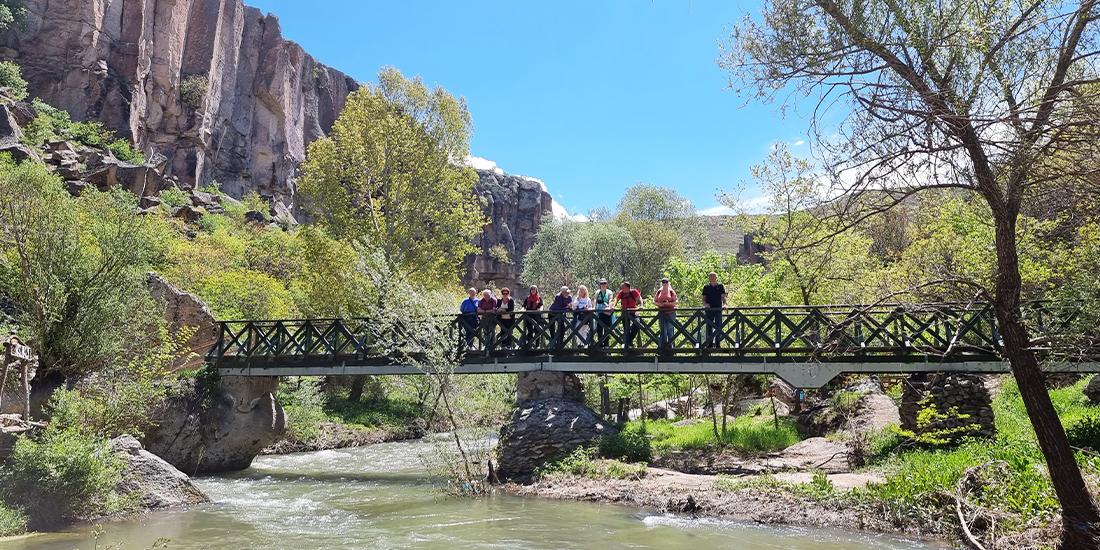 Ihlara Valley, Turkey by Dennis Bunnik
A 40-minute bus ride from Goreme takes travellers to the Ihlara Valley. This deep canyon is carved by the river from the volcanic rock and is flanked by rich vegetation along the banks.
The valley is a hub for cave churches, with a total of 105 along the 16-kilometre stretch, some of which are open to the public. Inside the churches, paintings and carvings show colourful religious dioramas.
Explore an underground city
Cappadocia is on the historic Silk Route which connected China and Turkey for trade, and it’s been home to many civilisations. Around 1800 BC, the Hittites (an Indo-European race) first settled here, discovering that the soft, porous rock could be carved into rooms — in fact, into entire underground cities.
Carved deep into the earth, up to eight stories deep, the underground cities are a fascinating place to visit.
Watch the sunset at Lover’s Hill
Cappadocia has a reputation for stunning sunrises when early morning hot air balloons dance against the morning colour. For those who prefer a holiday sleep-in, the sunsets are also marvellous.
Within walking distance of most accommodations, Lover’s Hill Sunset Point provides an accessible yet scenic place to watch the sunset. A wooden platform overhangs the cliff ever-so-slightly, or any place along the ridge provides a beautiful view as the sky changes. There’s even a small restaurant serving tea, coffee, wine and beer.
Views over the town at twilight show the myriad streets with quaint buildings and homes as the evening lights of the town begin to glow. Quirky rock formations amongst the buildings and the rolling hills and gullies form a distinctive panorama and perfect photo opportunities.
Start planning a journey to Cappadocia to see the wonderful natural scenery and cave-dwelling historical sites
Cappadocia is full of delightful stories, welcoming people and stunning scenery. First-time visitors should prepare to be awed by the beauty of this Turkish destination. A small group tour provides unique opportunities to learn about the local crafts, cuisines and trades — if this sounds enticing, we’re here to show you how to find all the wonderful experiences described.
There’s the option of a luxury tour of Turkey that prioritises comfort and bespoke experiences, or includes a journey through both Greece and Turkey — our local guides and expert team will guide every step of the trip.
Frequently asked questions
What’s the best time of year to visit Cappadocia?
Spring and autumn have the mildest weather, with fewer crowds than the peak summer season. Travelling at this time gives a more relaxed experience of exploring exotic landscapes and historical cities.
How many days in Cappadocia is enough?
Two or three days allows enough time to see all of the main attractions, stay in bespoke accommodations and explore the canyon, caves and fairy chimneys of the region.
Explore more of Turkey: