Overview
- First Impressions
- Horta, Faial Island
- Pico Island
- The Vineyards of Pico
- Ponta Delgada, São Miguel Island
- A Taste of São Miguel
- Sete Cidades
- Furnas Valley
- Farewell to the Azores
First Impressions
Our first impression was how isolated the archipelago is. The contrast between the lush green landscape, the black volcanic rock and the glistening blue of the Atlantic was wonderful, and the views over dormant volcanic craters were spectacular. The locals were so accommodating, and vantage points and landmarks were plentiful, so we were never short of a reason to pull over and take another photograph.
.png)
Horta, Faial Island
Our adventure began in Horta, one of the Atlantic's most famous yachting stopovers. Colourful marina murals, lively cafés and sweeping ocean views gave the town a laid-back charm, and it proved the perfect gateway to the islands.
We visited the Capelinhos Volcano, where a 1957-58 eruption dramatically extended the island and left a stark, moonlike landscape of ash and lava. We explored the site through the underground Capelinhos Volcano Interpretation Centre, right beside the partially buried lighthouse. The eruption was a global event, and volcanologists from around the world gained first-hand experience. The story of how the islanders coped with such upheaval was intriguing.
1.png)
Horta, Faial Island
4.png)
Pico Island
A short ferry trip took us across to Pico, and we enjoyed admiring the foreshore and port of Horta as we left. Pico is one of the most dramatic and beautiful islands in the Azores, and we hoped to glimpse the summit of Mount Pico, framed by rugged volcanic scenery and black lava fields. It’s usually shrouded in cloud but even so, it is a visual delight.
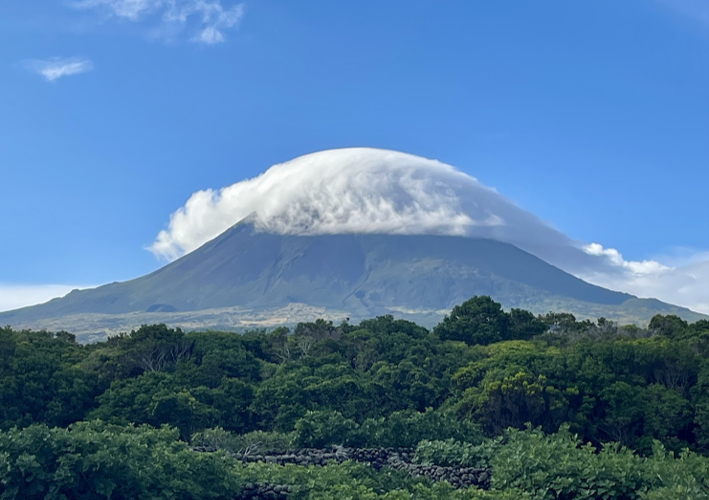
Pico Mountain, Pico Island
After arriving, we drove through the heart of the island at the foot of the towering mountain. At the historic whaling town of Lajes do Pico we explored the Whalers Museum, housed in the boathouses that once sheltered the traditional whaling boats. Whaling was the pathway for many Azoreans to travel the world. It’s an important historical reference point and a vital industry for survival on the islands at the time.
1.png)
Whalers' Monument, Lajes do Pico, Pico Island
2.png)
Wine Museum, Pico Island
Our final stop was the Wine Museum, where we were introduced to the island's fascinating wine traditions. Establishing vineyards in such forbidding terrain is a story of perseverance and adaptation.
The Vineyards of Pico
The next day we followed the coast, stopping for panoramic views along the way. The highlight was the UNESCO World Heritage-listed vineyard landscape. Over generations, the locals have transformed hardened black lava fields into viticulture unlike anywhere else in the world. Beneath the towering presence of Mount Pico, thousands of small stone-walled plots stretched along the coastline, protecting the vines from Atlantic winds and salt spray. It was a remarkable example of human determination. The wines are delightful as well!
Ponta Delgada, São Miguel Island
From Pico we flew to São Miguel, the largest island in the archipelago, and its capital, Ponta Delgada. São Miguel is known for its crater lakes, steaming geothermal springs, rolling green pastures and charming seaside villages, all rich in Portuguese culture and tradition. Ponta Delgada blended elegant Portuguese architecture with a relaxed island ambience. We found it a very comfortable city to walk around and, typical of the Azores, there were picturesque views wherever we looked.
A Taste of São Miguel
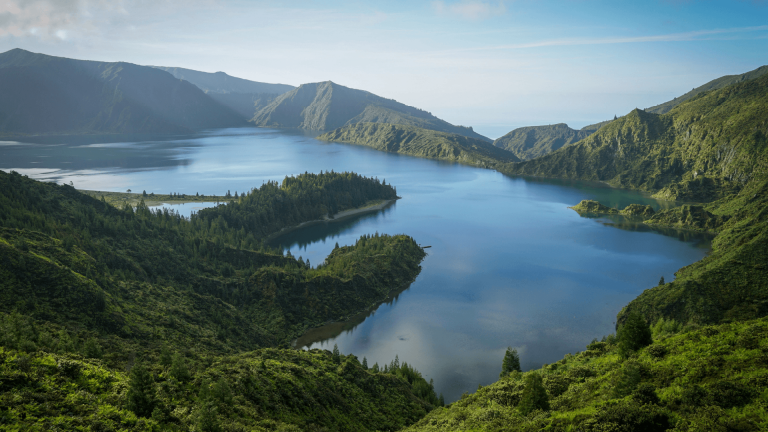
Our first full day on São Miguel was wonderful. We set out from our wonderful hotel on a scenic drive to the volcanic heights of Lagoa do Fogo, one of the island's most pristine crater lakes. We then followed the northern coast to the Gorreana Tea Plantation, Europe's oldest surviving tea plantation. We walked through the plantation, learned about traditional tea-processing methods and, naturally, enjoyed tastings of both the black and green teas.
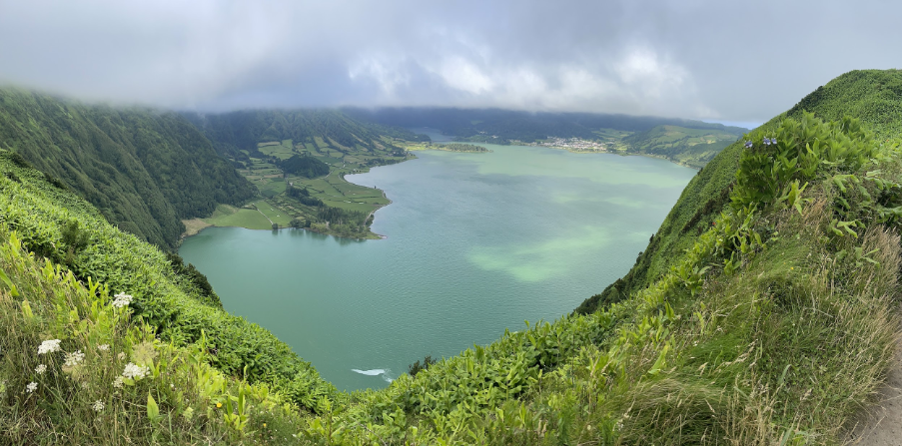
São Miguel Island
Sete Cidades
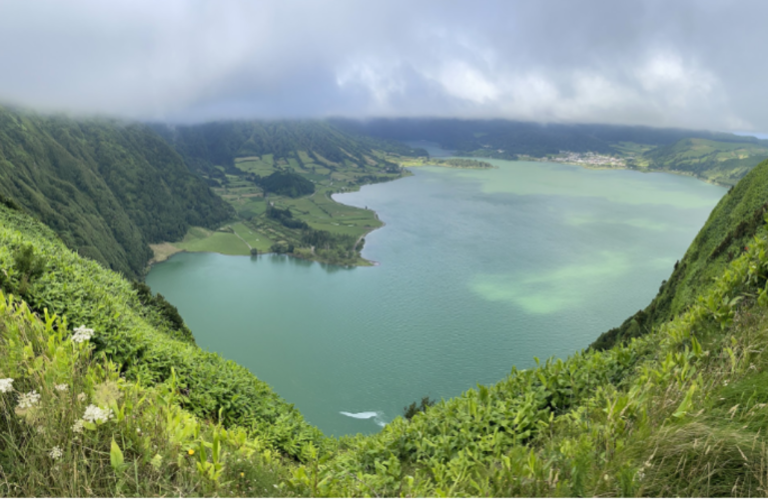
Next we explored Sete Cidades in a Land Rover with an expert guide, which was a thrilling way to discover the landscape. We stopped at breathtaking viewpoints with sweeping panoramas over the Green and Blue Lakes, then descended into the volcanic caldeira and passed through the village of Sete Cidades, nestled beside the lake. We enjoyed free time for lunch in a peaceful, storybook setting. The locals had covered the streets of the town with floral designs to celebrate a religious festival.
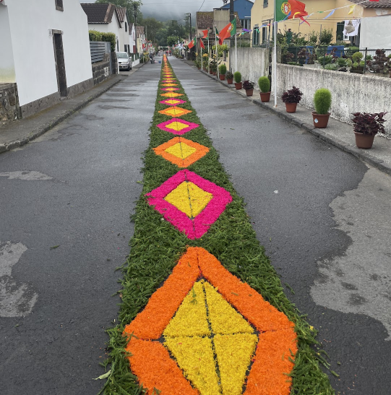
Sete Cidades, São Miguel Island
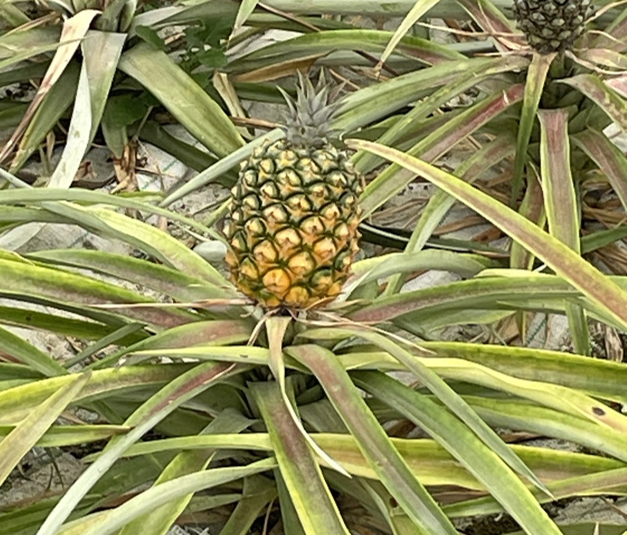
We ended the day at a pineapple plantation, where we learned about the unique slow-growth of Azores pineapples and tasted both the fruit, jam, ice cream and a liqueur made from it.
Pineapples in Azores
Furnas Valley
Our final day took us along the southern coast to Vila Franca do Campo, the island's first capital until the devastating earthquake of 1522. We strolled through the historic streets and sampled Queijadas da Vila, a traditional sweet pastry loved across the Azores.
We continued to the lush Furnas Valley, a spectacular geothermal landscape within an active volcanic complex. Around the village of Furnas and the crater lake of Lagoa das Furnas, hot springs bubbled and fumaroles hissed, and the air carried a distinctive hint of sulphur. On the lakeshore we watched the traditional cooking of cozido das caldeiras, a rich stew cooked in the natural volcanic heat, a local technique used for centuries. Later at a local restaurant, we enjoyed one of the biggest and most unique lunches we have ever seen.
 in Furnas by Gary Hayes.png)
Cozido das calderas in Furnas
We finished at the Terra Nostra Gardens, an enchanting botanic garden where exotic plants flourish in the volcanic environment. It even has gum trees and a Wollemi pine. The highlight was the iconic geothermal pool, where we bathed in its warm, iron-rich waters.
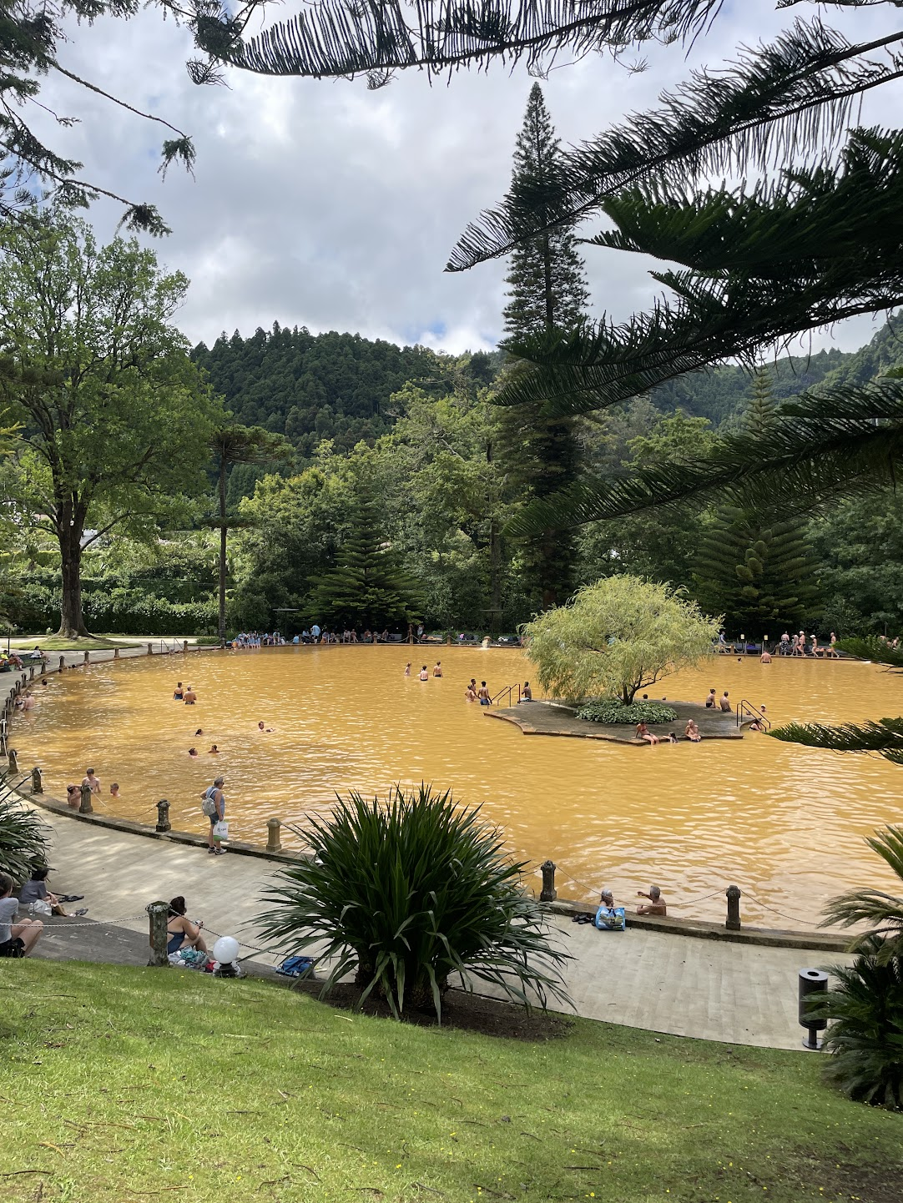
Terra Nostra Gardens, Furnas
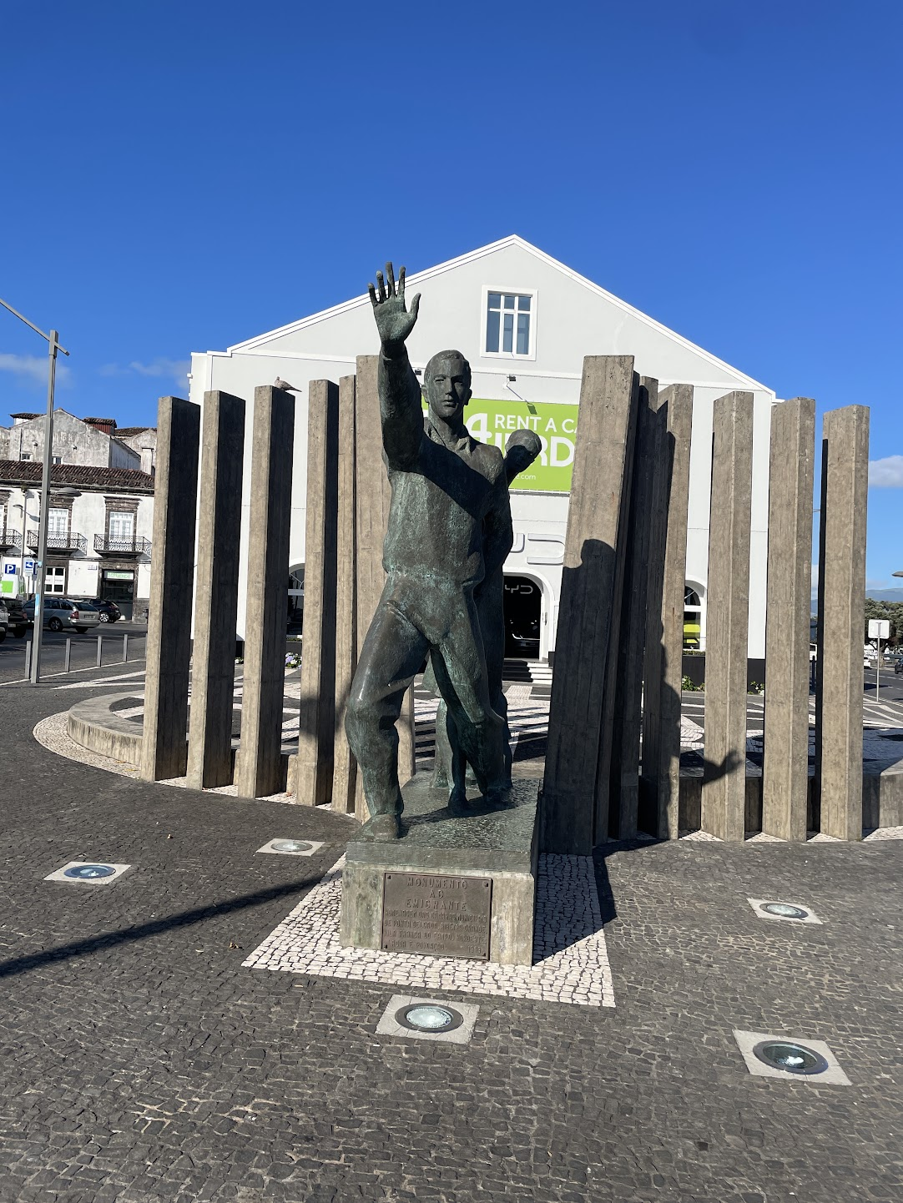
Monument to the Azorean Emigrant, Sao Miguel
Farewell to the Azores
The Azores surprised us at every turn. In just a few days we walked through a whaling museum, a vineyard grown from lava, a tea plantation and a garden with a steaming pool. We ate a stew cooked by the earth itself. These islands at the edge of the Atlantic are green, black and blue, and we left with a head full of memories and a camera full of photographs.
Ready to discover the Azores for yourself? Explore our Azores Island Explorer tour for an in-depth adventure, or combine your island escape with mainland discoveries on our Treasures of Portugal & Azores tour!
All photos by Gary Hayes
People also read