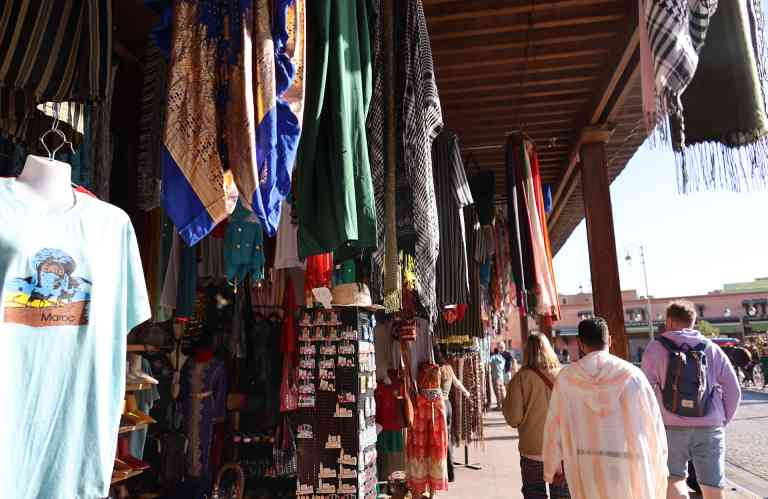
A sprawling city home to almost 1.6 million people, 48 hours gives just the right amount of time to explore the many sights Marrakesh has to offer. From the buzz of Jemaa el-Fnaa square to the history of the Medina, Marrakesh surprises and delights at every turn.
Our Marketing Manager, Kate, recently had the opportunity to travel to Marrakesh, so follow along as she recounts her two-day sojourn in this unique city.
Overview
Day 1 – A sensory overload
The heartbeat of Jemaa el-Fnaa
Arriving in Marrakesh, the first place on many lists is the buzzing Jemaa el-Fnaa square. Seen as one of the most important areas of the medina, it has been a gathering place for the people of Marrakesh since the 11th or 12th century.
The atmosphere of the square changes significantly between the day and night, so I highly recommend visiting twice!
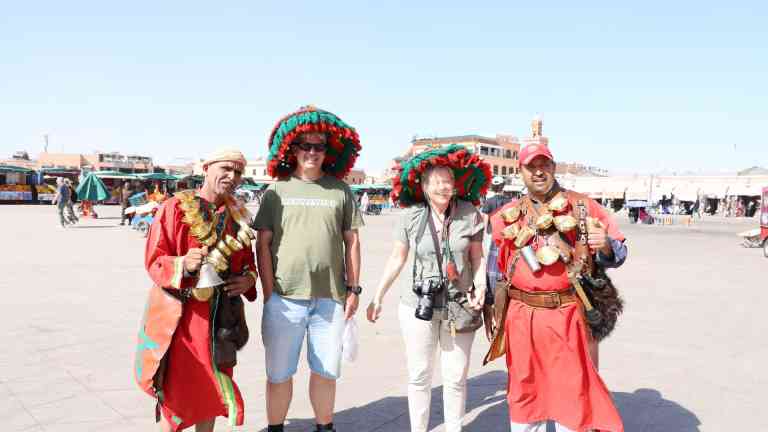
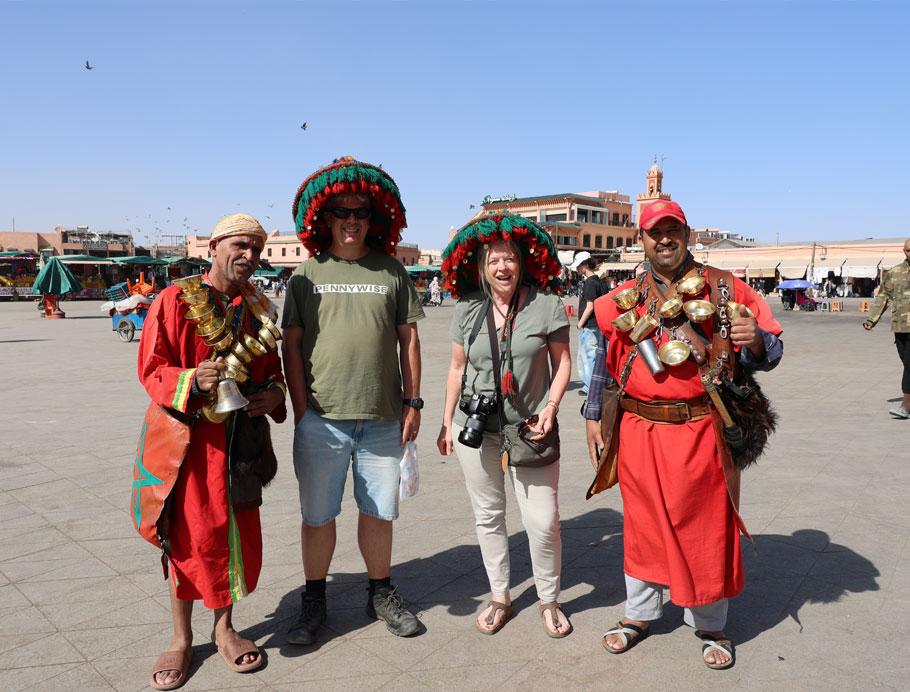
During the day, I saw the traditional water sellers in their brightly coloured outfits with brass cups around their necks, snake charmers with their mesmerised cobras, and monkey trainers who have trained their monkeys to climb all over unsuspecting tourists. There are plenty of great photo opportunities, just make sure you have some dirham (the local currency) on hand, as they will expect a tip for a photo!
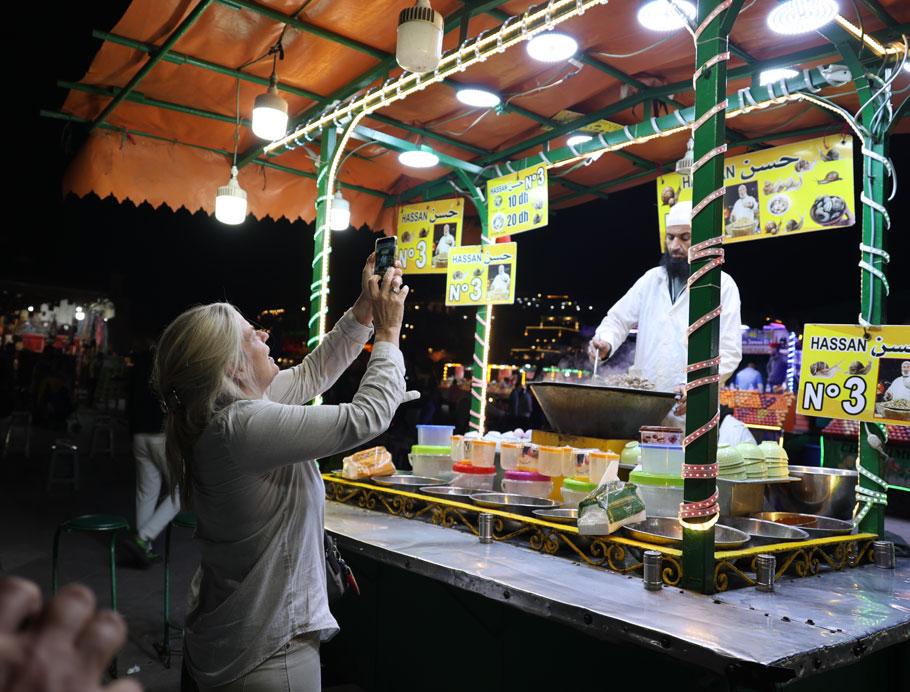
At night, the buzz increases tenfold, as daytime stalls give way to vendors selling all sorts of Moroccan cuisine. If you’re braver than me, you might even like to try a snail or two – I’m told they are a little bit spicy! As we indulge in all sorts of delectable treats, traditional Moroccan music is playing in the background, and we even tried our luck at the equivalent of what we would consider a side-show game here in Australia.
Visiting Jemaa el-Fnaa really is a must-do on any Moroccan itinerary.
An evening with the locals
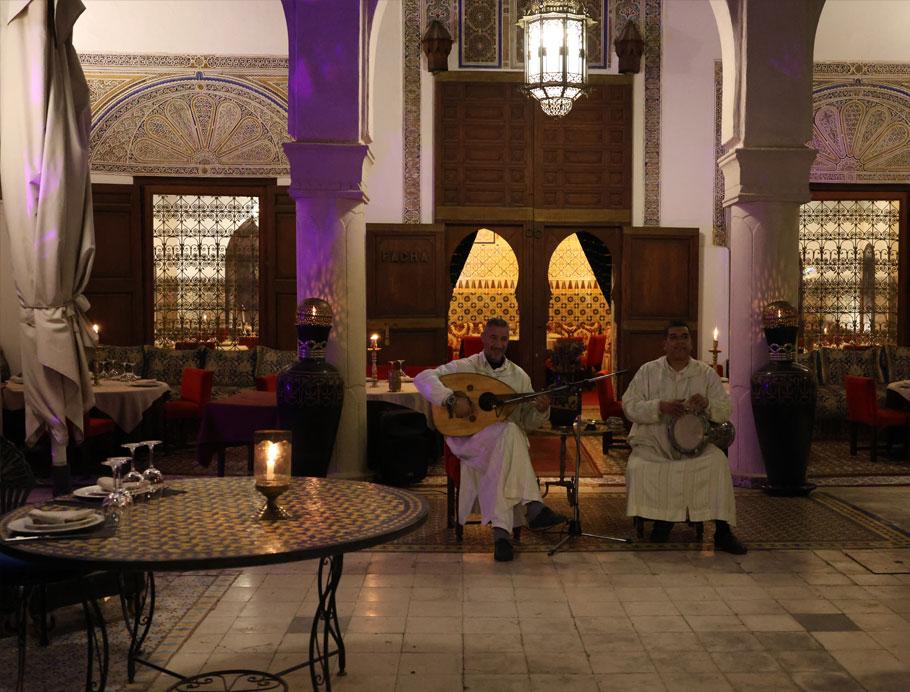
Passing back through the square, we made our way to a local restaurant for a delicious dinner and a show.
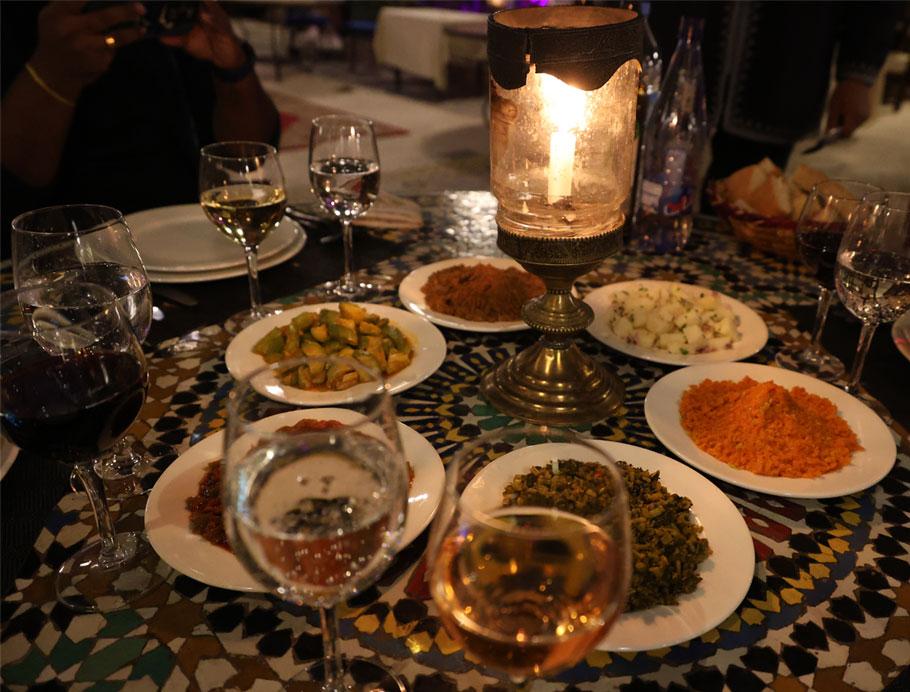
The meal begins with khobz (Moroccan bread) and a selection of salads and dips – individual dishes of carrots, tomatoes, capsicums, eggplants seasoned with garlic, paprika, cumin, and chili. Traditional Moroccan music sets the scene as I savour the flavours.
The main course is a large Moroccan tagine, filled with buttery couscous, tasty vegetables, and perfectly cooked lamb.
We then washed it all down with a cup of Moroccan mint tea. If you’re a bit of a sweet tooth like me, you’ll want to try it the traditional way, mixed with plenty of sugar. If not, you can certainly ask for no sugar. The pouring of the tea is a highlight in itself, with it gracefully poured from a height to create more of a froth.
Once dinner’s finished, we have the option to head back to the hotel or spend even more time exploring the lively Jemaa el-Fnaa by night. With another big day of sightseeing instore tomorrow, we can’t stay out too late!
Day 2 – History, architecture and authentic Moroccan flavours
Saadian Tombs
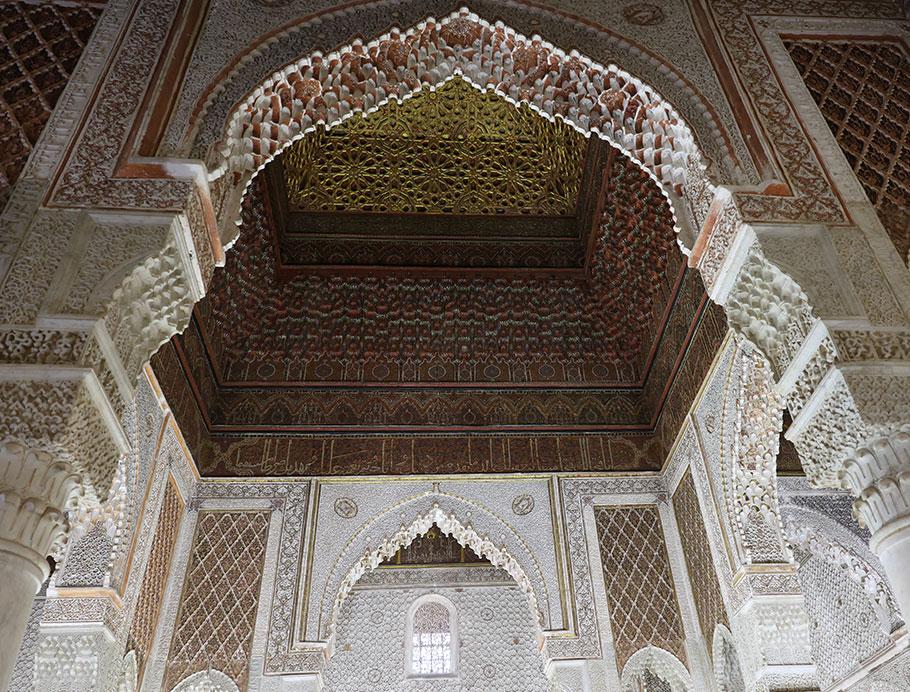
Located within the Kasbah Mosque, the Saadian Tombs date back to the sixteenth century and the reign of Sultan Ahmad al-Mansur, the third ruler of the Saadi dynasty. Following the demise of this dynasty, the tombs were sealed off by Sultan Moulay Ismail, in an attempt to erase the legacy of the Saadian dynasty completely. It wasn’t until 1917 that they were rediscovered. Amazingly, the insides were found relatively undisturbed, with many of the original decorations still intact.
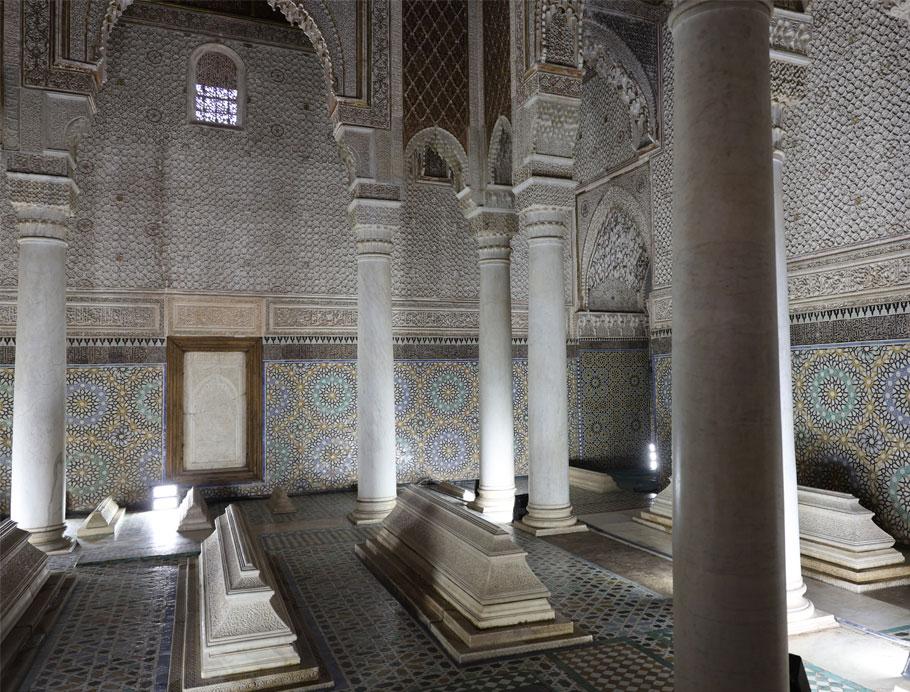
Arriving in the Kasbah, our guide recommended heading straight for the tomb, as there is often a line to get in. He was definitely right about that, and after a short wait, we were able to see inside the Tomb where al-Mansur and his family have been laid to rest. A fusion of Moorish and European styles, the tombs are decorated with carved cedar wood, intricate stucco carvings, and colourful, mosaic tiles, and are truly a sight to behold. While we can’t go all the way in, we can still get a good look at the architecture from the small doorway.
Back out in the garden area, we were then able to explore the rest of the Kasbah, where you’ll find approximately 60 more intricately decorated tombs. While the names have been lost to history, it is a beautiful resting place for many members of the Saadi dynasty.
Bahia Palace
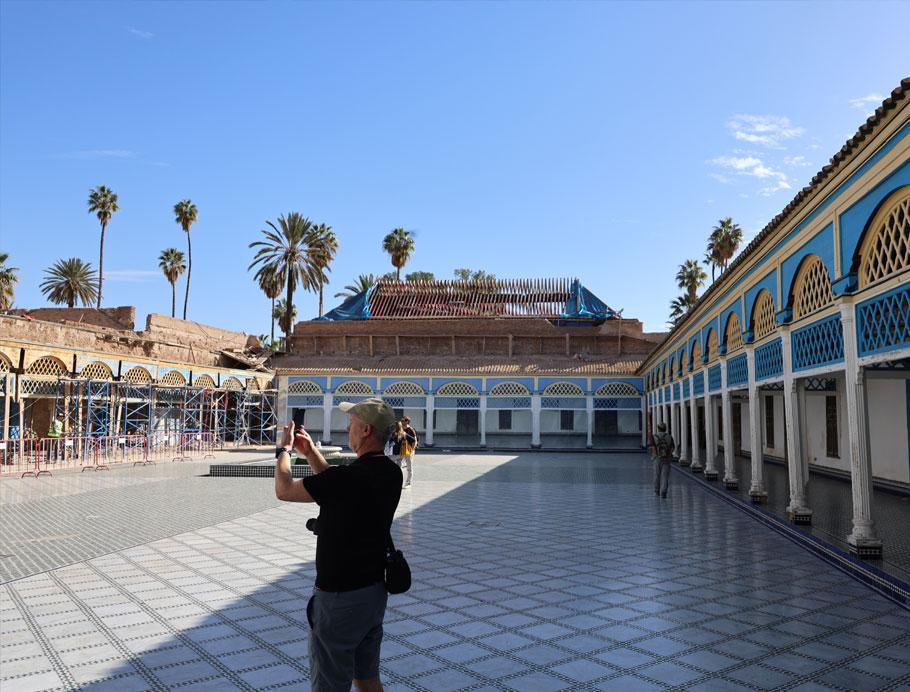
Compared to many of the other sights we’ve seen in Marrakesh, Bahia Palace is surprisingly new! Built in the 1860s by the grand vizier to the sultan, it originally served as a royal residence, before playing more of an administrative role, and eventually becoming the museum it is today.
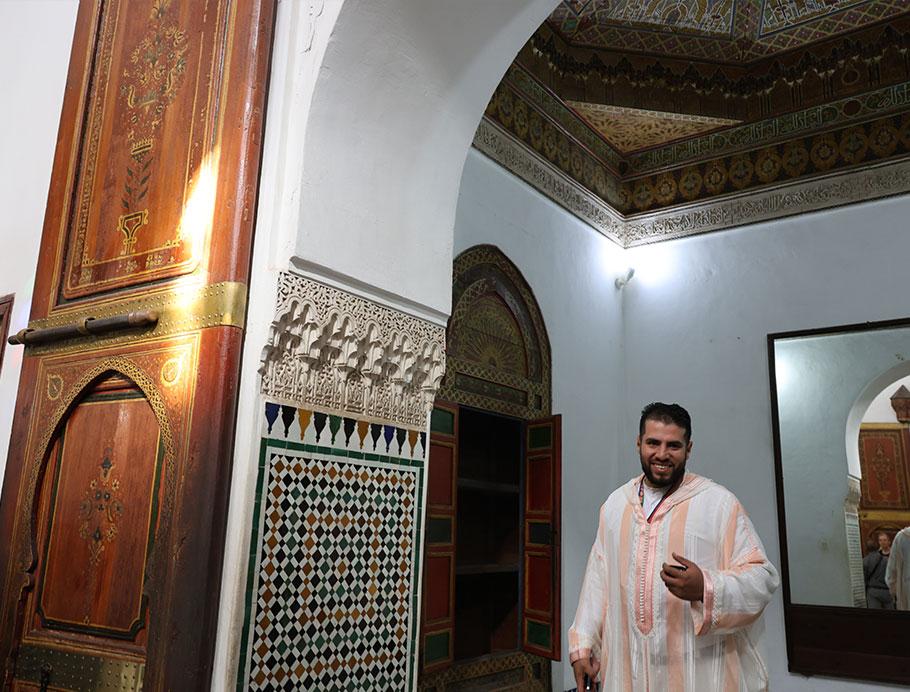
A complex of over 150 rooms, gardens and courtyards, it is a labyrinth of colourful architecture to explore. As we wander through the riads, apartments, courtyards, harems and hamams, we’ll discover the intricate Andalusian-Moroccan architecture, known for its traditional zellige tilework.
The Palace sadly suffered significant damage thanks to an earthquake back in September 2023. During our visit, the palace was still undergoing major restorations using traditional Moroccan methods. Despite this, we were still able to see much of the incredibly beautiful Palace.
Koutoubia Mosque
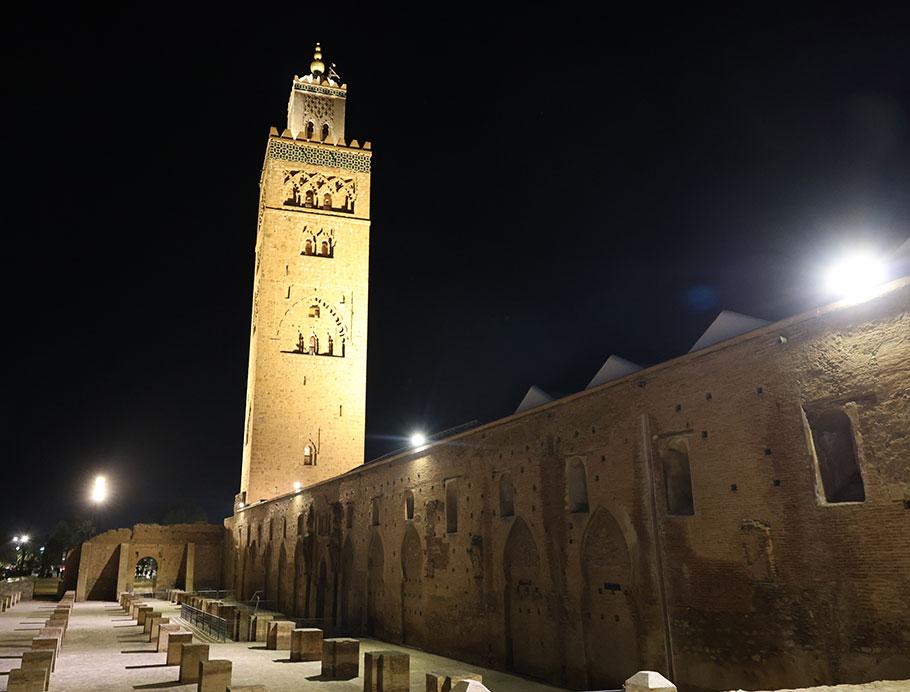
Located a short distance from Jemaa el-Fnaa square, Koutoubia Mosque is one of Marrakesh’s iconic sights.
Standing at 77 metres tall, the historic Koutoubia Mosque is the tallest building in Marrakesh. In fact, the city has laws in place to prevent any new buildings exceeding the height of its impressive Minaret, so that it will remain as the highlight in Marrakesh’s skyline for many years to come.
First built in 1147, it was completely reconstructed just a short time later in 1158. According to our incredible tour guide, Soufiane, the reason for the reconstruction isn’t quite known, but is widely thought to be due to the fact it wasn’t accurately aligned to Mecca.
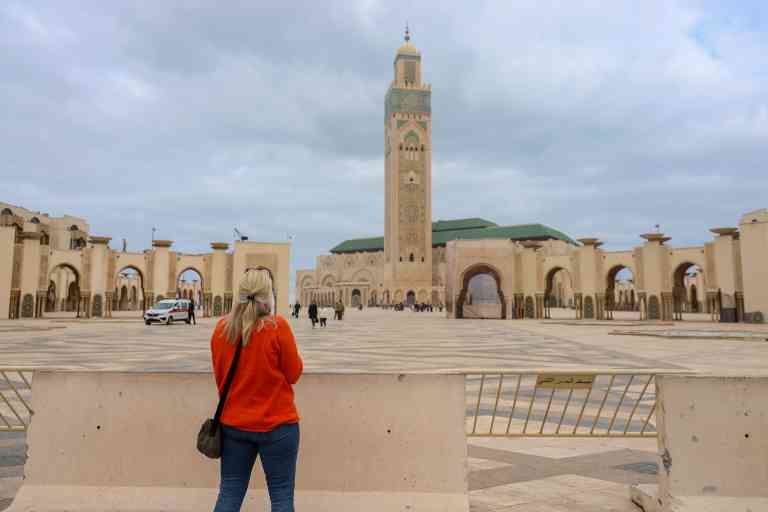
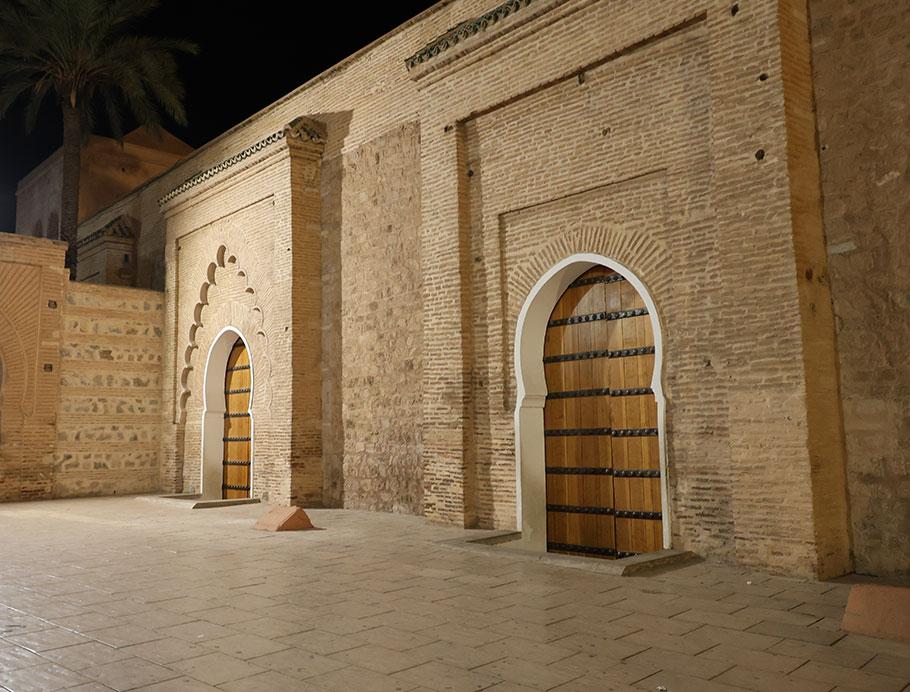
A masterpiece of Almohad architecture, we are only able to admire its beauty from the outside, as non-Muslim people aren’t permitted to enter a Mosque (with the exception of the Hassan II Mosque in Casablanca).
Hands-on heritage: Moroccan cooking class
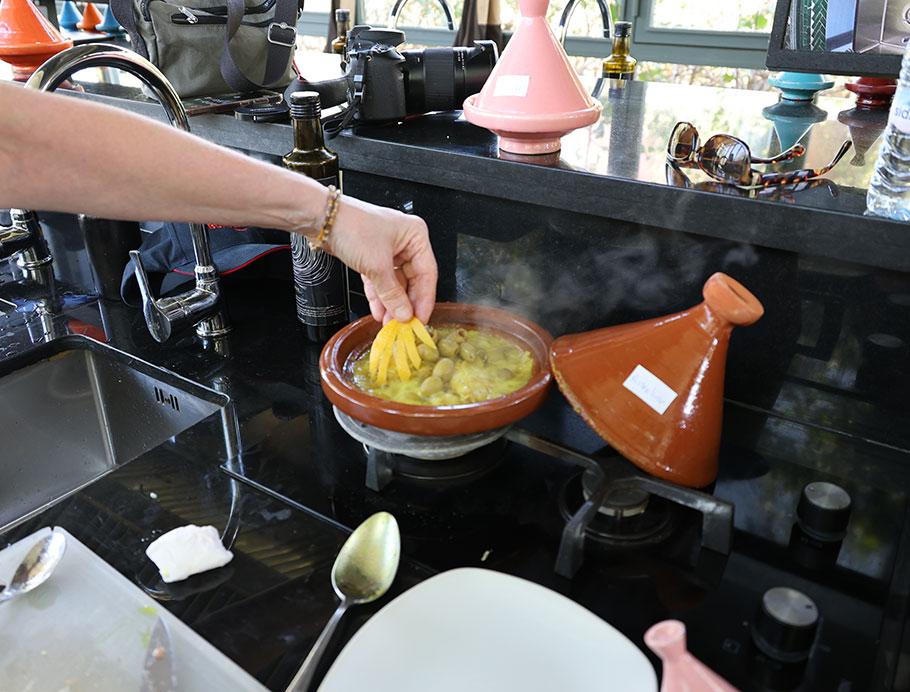
Lunch on day two is an absolute delight, as we enjoy a cooking class to discover the art of traditional Moroccan cuisine. Located in a state-of-the-art kitchen within a luxury hotel, it is the perfect setting to discover the craft of creating a delicious tagine.
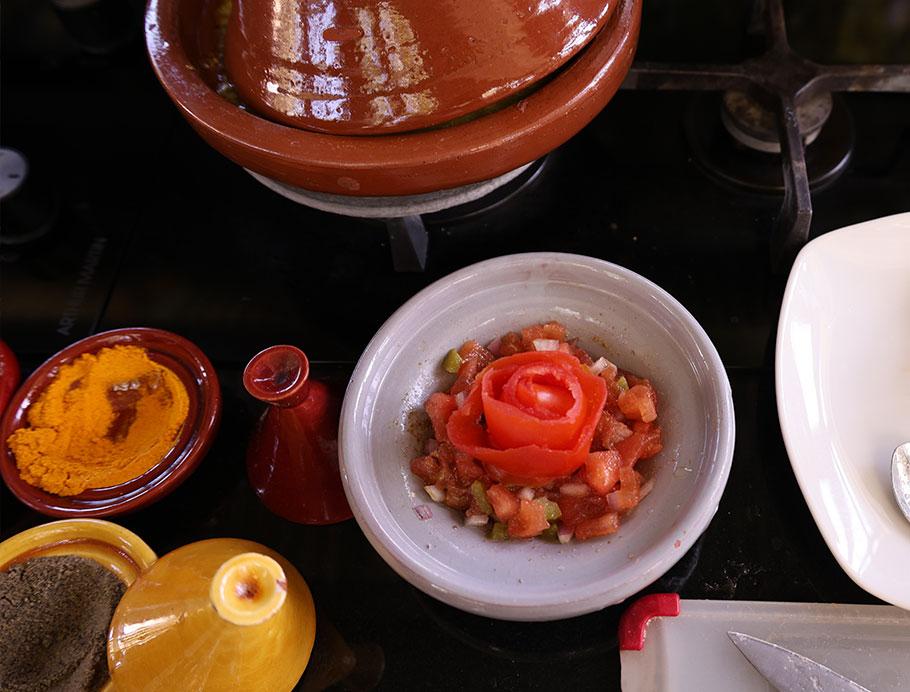
With an instructor and two qualified chefs to assist us, we got our hands dirty and worked quickly to make a delicious preserved lemon chicken tagine, with a Moroccan salad on the side. We first chopped some onions and herbs, before marinading our chicken in a blend of preserved lemon, herbs and spices. Placing it all into the tagine with some olives and water, it was then left to cook – surprisingly easy!
Next we prepped the salad, which included tomato and onion in a salsa-like dish, topped with a tomato rose. We each peeled the tomato with as much precision as possible, before rolling the skin into a rose. Some were certainly more successful than others!
While the tagine finished cooking, we headed down to the courtyard area for a refreshment. Before long, our tagines and salads were served to us, ready to indulge. Both elements were honestly delicious, and we were proud of our culinary creations.
Motorbike city tour
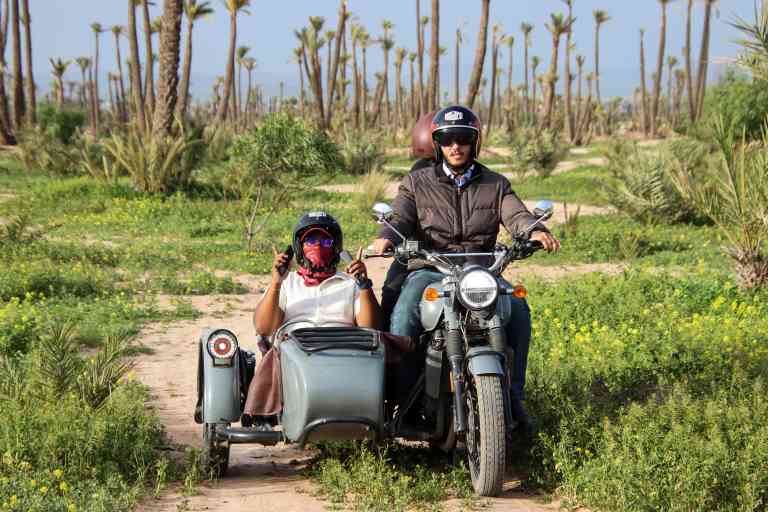
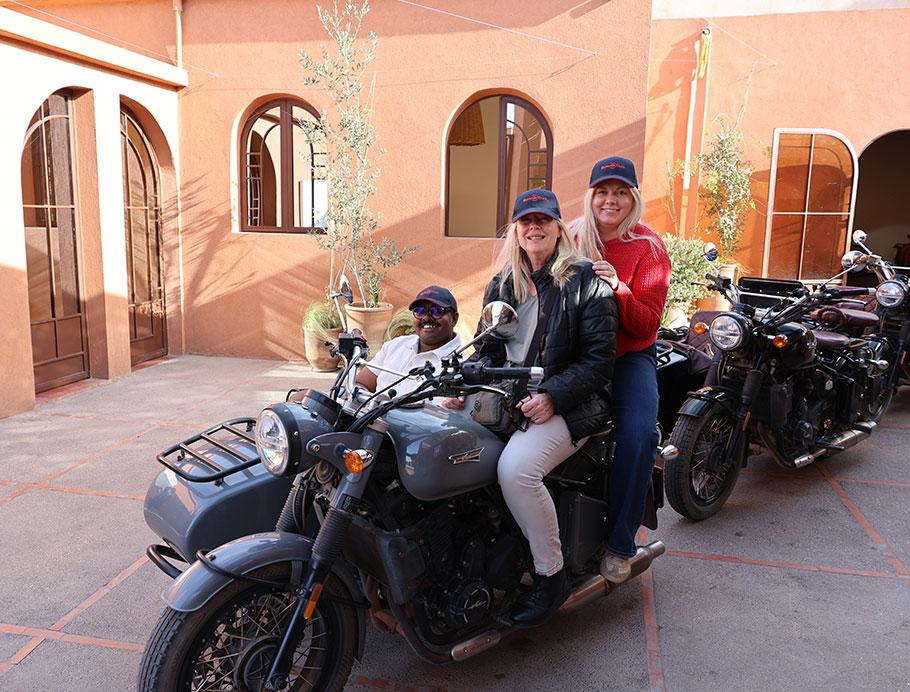
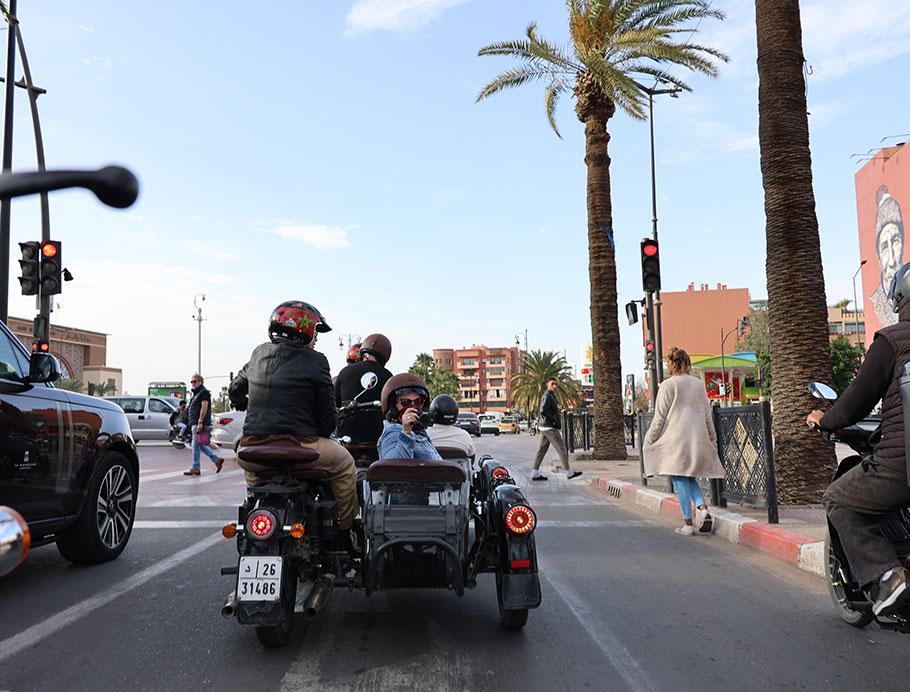
A sprawling city, the absolute best way to finish our time in Marrakesh was with a city tour on motorbikes! A new addition to the Moroccan Discovery 2027 tour, we were lucky enough to be the first Bunnik Tours’ guests to test out this special experience.
With our helmets and complimentary bandanas on, we split into pairs, either hopping onto the back of the bike, behind our expert driver, or alongside in a sidecar. We motored down boulevards as our guide pointed out highlights and gave us a history lesson along the way. We first stopped at La Palmeraie, a huge oasis north of the Medina. While many of the palm trees are sadly suffering thanks to a toxic fungus, we got a quick history lesson and were able to see one of the wealthiest areas in Marrakesh, filled with modern mansions, fancy golf courses and luxury resorts.
Heading back towards the heart of the city, we ventured through the maze of narrow alley ways, that have served as the homes and businesses of the locals for centuries. Sometimes the walls were mere centimetres wider than the motorbike and side car, making for an exciting experience. At one point we had to make a sudden stop when we came upon a horse and cart. The horse ended up reversing for us so that we could get through – certainly not something you experience every day!
This was an experience that will stay with me for the rest of my life.
Without a doubt, Marrakesh is an absolute must-see destination for any trip to Morocco. Whether you’re a history buff, foodie or architecture lover, there really is something for everyone.
If you’re interested in seeing it for yourself, we have a number of Moroccan tours that include a trip to Marrakesh, including Moroccan Discovery, Morocco In-Style and Spain, Portugal & Morocco. With 2 or 3 days in the city, you’ll have the perfect balance of guided sightseeing, cultural immersion and free time.