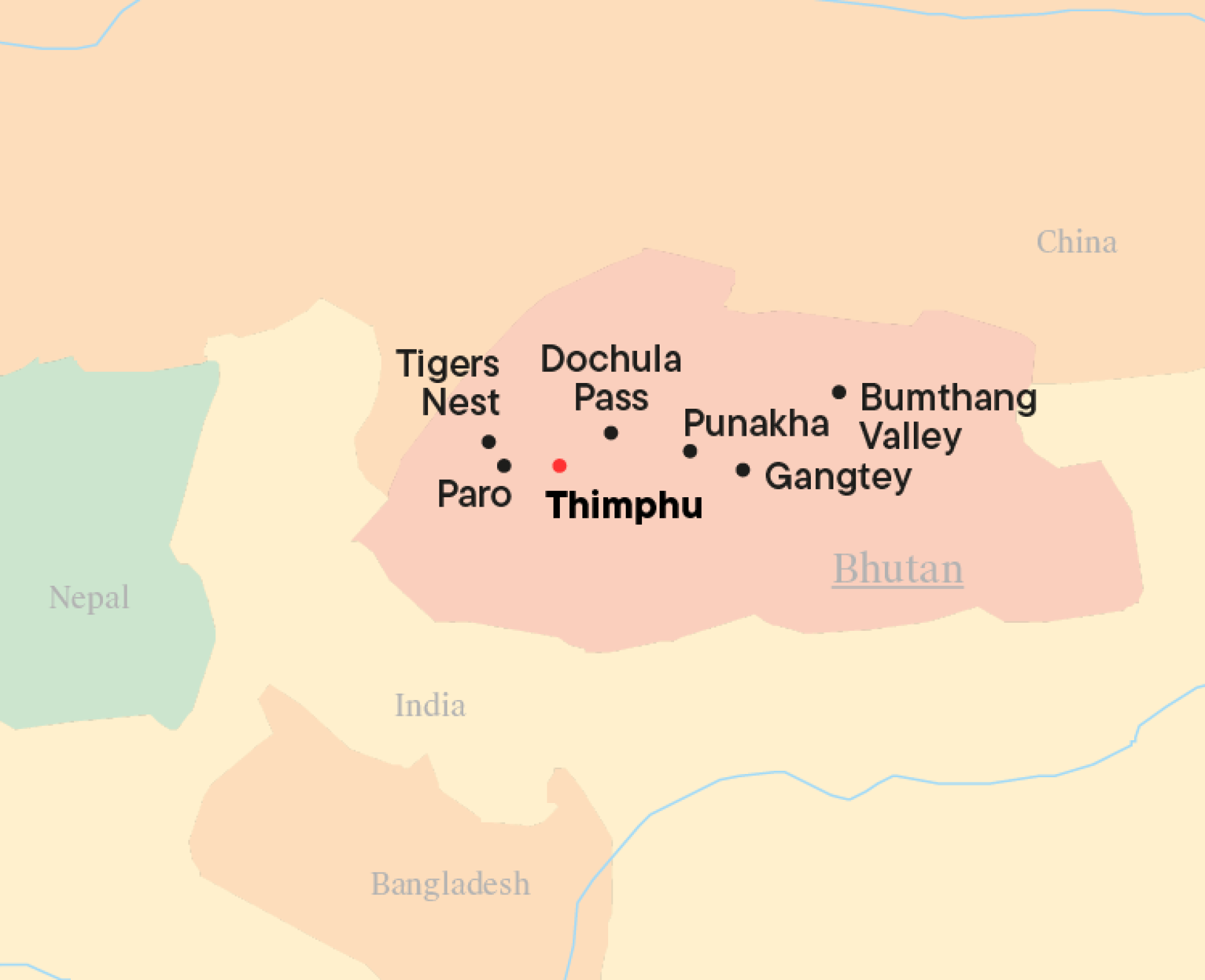
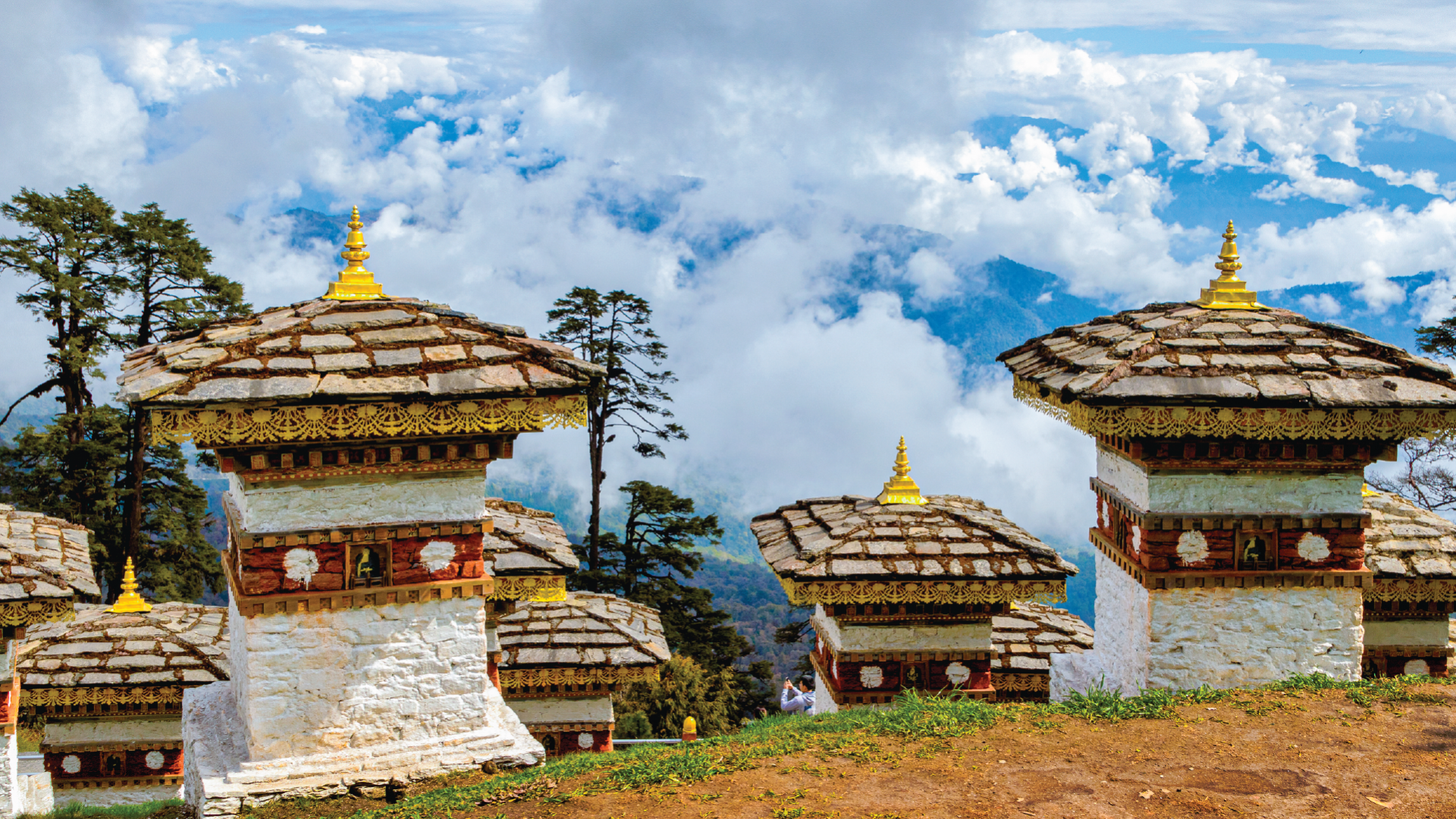
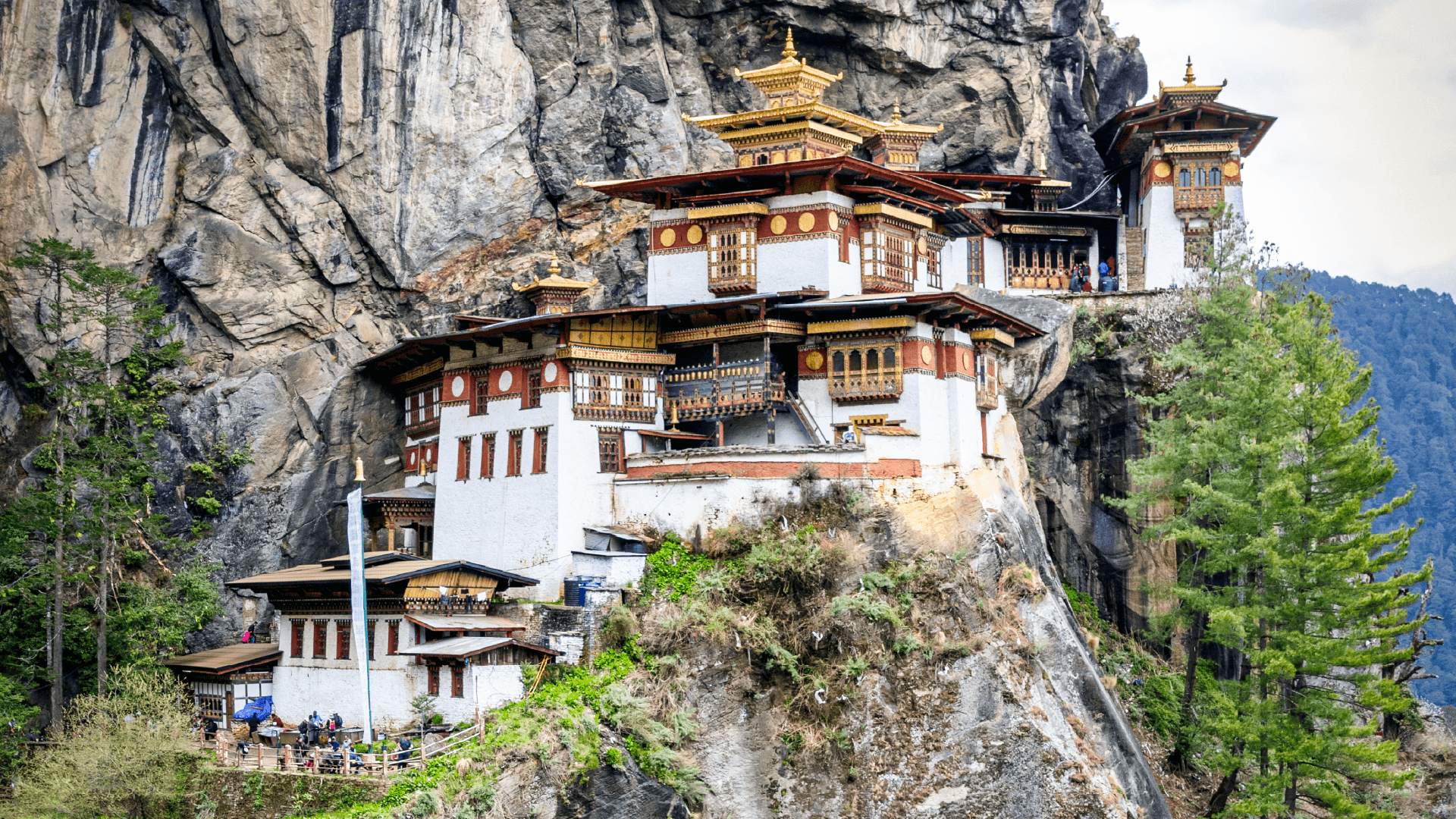
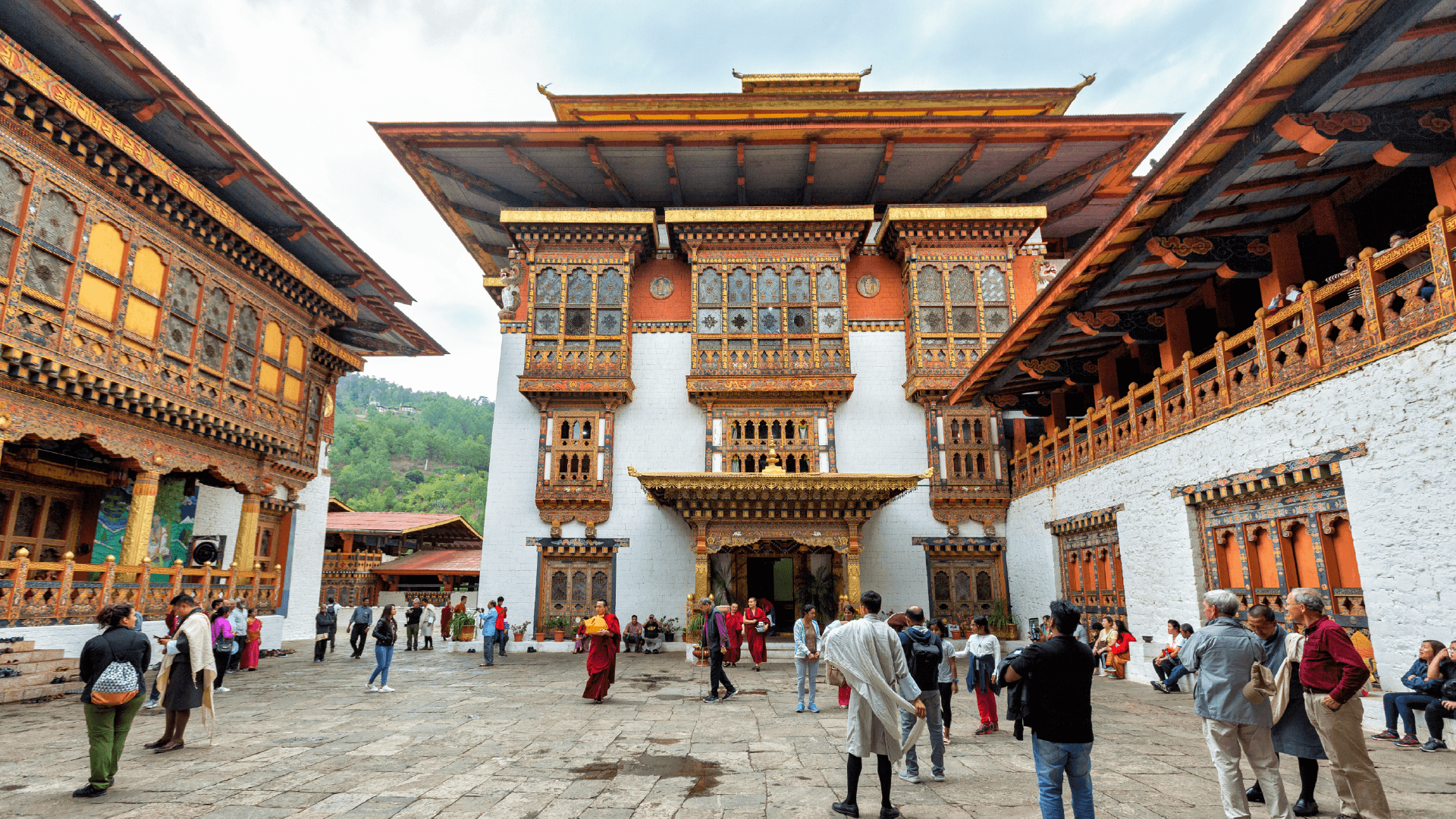
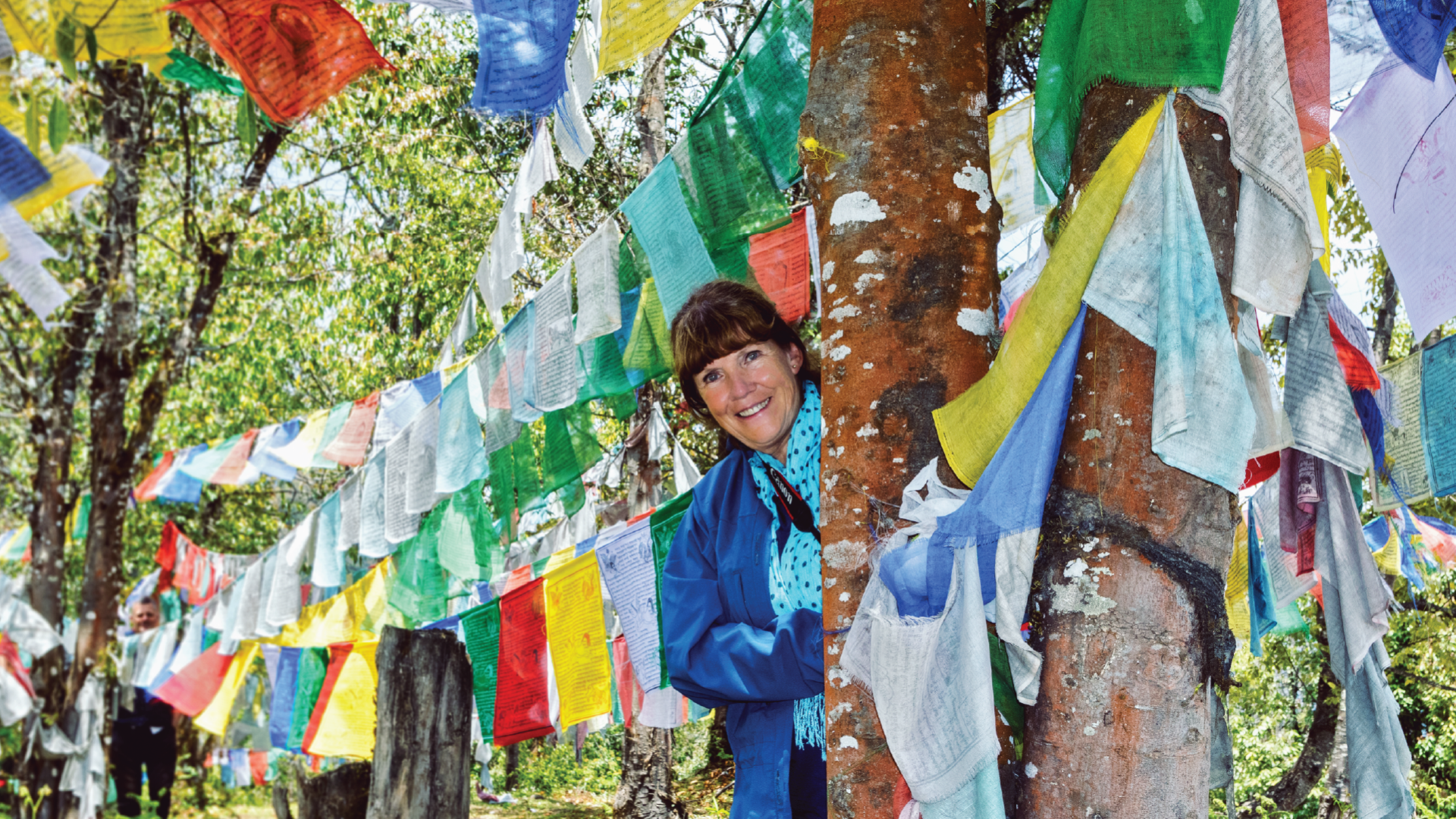
Welcome to Bhutan — the last Himalayan kingdom where happiness is a national policy! Think dramatic cliffside monasteries, prayer flags fluttering in mountain winds, and dragons on every flag. It's mystical, magical, and blissfully untouched by mass tourism. Ready for an adventure unlike any other? Discover all that Bhutan has to offer on a Bunnik Tours holiday – book one of our small group tours online today or get in contact with one of our friendly travel specialists.
Small Group Tours
Best of Bhutan
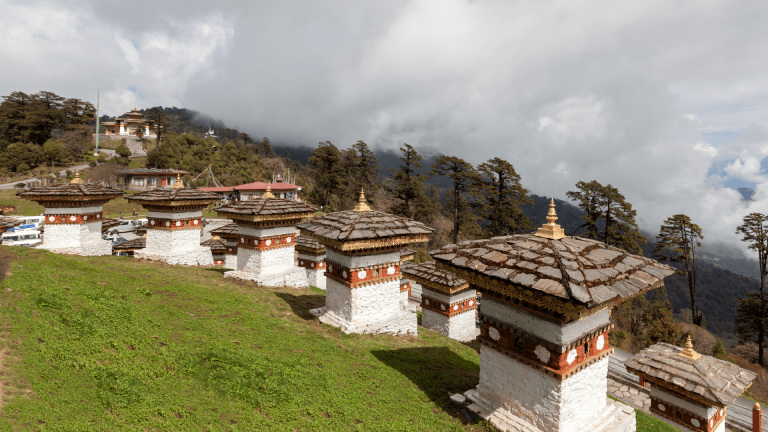
Discover the timeless Kingdom of Bhutan, where towering Himalayan landscapes, ancient monasteries and deeply rooted Buddhist traditions create an unforgettable journey.
Bhutan Facts & Tips


Did you know?
- Bhutan is known for its unique philosophy of Gross National Happiness (GNH), which measures success by happiness rather than wealth!
- Thimphu is the only capital city in the world where there aren’t any traffic lights.
- Bhutan is the only carbon-negative country in the world, meaning its vast forests absorb more carbon dioxide than the nation produces.
- Over 70% of the country is covered in trees, and the nation's constitution requires at least 60% of the land to remain forested.
- Bhutan is home to Gangkhar Puensum, the highest unclimbed mountain in the world, as mountaineering above 6,000 meters is banned to protect sacred peaks.
- The national animal of Bhutan is the takin due to its association with Bhutanese mythology and religious history. As legend has it, a Tibetan saint created the unique animal by fixing the head of a goat onto the body of a cow.
- The national sport of Bhutan is archery.
- Phallic imagery plays a cultural role in Bhutan and are painted on houses as a symbol of fertility and good luck.
Visas & Passports
Australian passport holders travelling to Bhutan do need a visa at this time. An eVisa must be applied for before you travel. Please visit the Passports and Visas page for more information.
Bhutan also has a mandatory Sustainable Development Fee of USD $100 per person, per night, as well as a separate one-time USD $40 visa fee, for all travellers to the country. This is paid in advance and is included in the price of your Bunnik Tour.
We require that your passport is valid for travel for at least six months from the date you are planning to return to Australia. Your passport must be valid to travel internationally and must be machine-readable. You also need to carry a valid return ticket on you.
Whether travelling on an Australian passport or the passport of another country, all travellers require visas for a number of countries, and it is your responsibility to secure what may be required before departing Australia. You can consult with your travel agent, but it is also recommended that you check the foreign embassy website for your respective destination as it can also provide you with useful information.
Australia does not currently have a resident embassy in Bhutan. The Australian High Commission in New Delhi, India, is accredited to Bhutan and provides consular assistance to Australians travelling or living there.
Australian High Commission, New Delhi
1/50 G, Shantipath
Chanakyapuri
New Delhi 110021
India
Ph. +91 11 4139 9900
Currency
The official currency of Bhutan is the Bhutanese Ngultrum (BTN; symbol Nu.). Banknotes are available in denominations of Nu.10, 20, 50, 100, 500 and 1,000. The Indian Rupee is also widely accepted in Bhutan, although it is advisable to carry some local currency in smaller denominations.
Advise your bank of your travel plans so that they can make a note of it, otherwise they may cancel your credit card as a safety measure due to overseas transactions. Also make a note of the 24-hour emergency contact number of the bank or financial institution that issued your credit card in the unlikely event that your card is lost or stolen.
Whenever possible, use ATMs during banking hours so that if a machine ‘eats’ your card, you can deal with it straight away. It is always advisable to carry a supply of cash in addition to your credit card, particularly when travelling outside the main towns.
If you don’t have Bhutanese Ngultrum with you on arrival, we advise you to exchange some money into the local currency at the airport, even if the exchange rate is not the best. This way, you’ll have money for a drink, snack or small purchase during those first few hours of arrival. Your guide will be able to advise you on the best places to exchange money. Foreign exchange services in Bhutan are authorised to exchange convertible currencies and Indian Rupees.
Small change is also useful for paying for toilets and making small purchases while on tour, particularly in more rural areas.
Dining
- The price of a cappuccino in Thimphu is approximately Nu.100–200
- The price of an inexpensive lunch is approximately Nu.200–600
- The price of dinner in a moderate restaurant is approximately Nu.700–1,500
- The price of a beer in a local bar is approximately Nu.150–300
Bhutanese cuisine is hearty, flavourful and famous for its love of chillies. The country’s national dish is ema datshi, a traditional stew made from chillies and local cheese, which is considered a staple of Bhutanese cuisine. Rice forms the basis of most meals, particularly the distinctive red rice grown in the Himalayan valleys. Other popular dishes include phaksha paa (pork cooked with red chillies), jasha maru (spiced chicken stew) and a variety of vegetable curries made with locally grown produce.
Due to Bhutan's mountainous landscape and strong agricultural traditions, many ingredients are locally sourced and seasonal. Dairy products, chillies, potatoes and buckwheat feature prominently in many dishes. Traditional butter tea, known as suja, is commonly served throughout the country and offers visitors a unique taste of Bhutanese culture.
While Bhutan offers a growing range of international cuisine in larger towns such as Thimphu and Paro, trying the local food is an important part of the travel experience. When dining at local restaurants, choose venues that are busy as the turnover of food is likely to be higher. Take care with undercooked meat, ready-peeled fruit and raw salads.
We recommend drinking bottled or filtered water only. Please ensure bottle seals are intact and avoid adding ice to drinks unless you are confident the water source is safe. Soft drinks and alcohol are generally fine.
Important: When dining at buffets (i.e. breakfast) please refrain from taking food away with you to ‘save’ for later! If you feel that you'll need snacks between meals, pack some dried fruit, nuts, muesli bars etc.
If you have specific food allergies and/or preferences, we highly recommend you take every precaution before your tour, including carrying a small card with your food allergy listed in the language of each country you are travelling to, to show to restaurant staff when ordering. Whilst we take all dietary requirements seriously, due to the serious nature of potential allergic reactions, it is your responsibility to be as prepared as possible.
Weather
Bhutan has four distinct seasons, with the weather varying considerably depending on altitude and location. Summer runs from June – August and brings the Indian monsoon, with most rainfall occurring in the southern and central regions. Spring and autumn are generally mild and pleasant, with clear skies and comfortable temperatures, making these popular times to visit. Winters, from December – February, are cold and dry, with frost common throughout the country and snowfall at higher elevations. Temperatures can vary significantly between day and night, so even during the warmer months it is advisable to bring some warm clothing.
Getting Around
Want to get out and explore on your own?
When you are in Thimphu or Paro, taxis are the easiest way to get around independently. Taxis are readily available in the main towns, but it is a good idea to agree on a fare before starting your journey. Bhutan does not have a widespread public transport network, so taxis and private vehicles are the most convenient options for getting around.
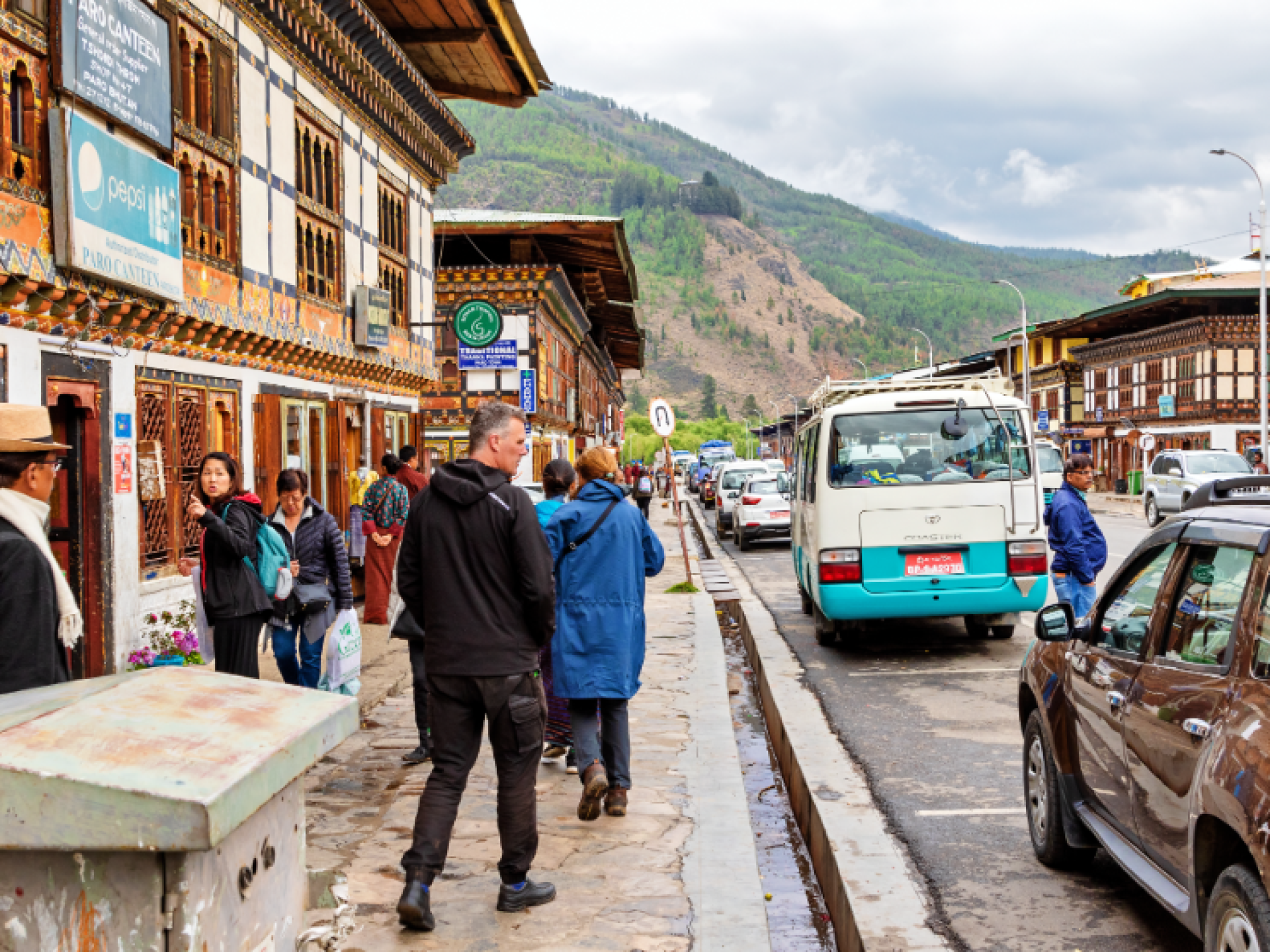
If you are staying in Thimphu or Paro, walking is also a great way to explore the towns, particularly the main shopping areas, markets and local sights. Outside the main towns, travelling between destinations can take longer due to Bhutan’s mountainous terrain and winding roads, so most visitors travel by private vehicle or organised transport.
When catching a taxi, make sure you have some smaller notes with you and ask your hotel or guide to recommend a reputable driver. Taxis in Bhutan are generally metered, but it is still worth confirming the fare before setting off.
Shopping
So, you’d love to bring home a special souvenir from Bhutan…
Bhutan is well known for its traditional arts and crafts, so there are plenty of unique souvenirs to choose from. Look for hand-woven textiles, colourful scarves, traditional clothing, handmade paper, wooden bowls, bamboo and cane products, carved masks, thangka paintings and Bhutanese handicrafts. Bhutan is also known for its beautiful hand-woven fabrics, particularly those made from cotton, silk and wool.
Prayer flags and traditional Buddhist items are also popular souvenirs, although it is important to be respectful when purchasing religious objects. Bhutanese stamps, handmade jewellery and local tea are other good options for gifts to take home.
Bargaining is common in markets and some smaller shops, although it is not generally expected in fixed-price stores. If you are unsure, ask your guide or shopkeeper whether the price is negotiable before making an offer. Remember that a friendly approach is usually the best way to bargain.
The best places for browsing include the markets and handicraft shops in Thimphu and Paro, where you can find a range of locally made textiles, crafts and souvenirs. The Centenary Farmers’ Market in Thimphu is also worth a visit for a glimpse of local life and a range of Bhutanese produce.
Local Etiquette
- The traditional Bhutanese greeting is a slight bow with the hands together in a prayer-like gesture. A simple “Kuzuzangpo” or “Kuzuzangpo la” is also a polite way to greet someone.
- Bhutanese people generally value politeness, humility and respect. Avoid being overly loud, confrontational or direct, particularly in formal or public situations.
- It is customary to remove your shoes before entering temples, monasteries and some homes. If you see shoes left at the entrance, follow the local custom and remove yours too.
- Dressing modestly is very important, especially when visiting religious sites. The general rule is to cover your arms and legs.
Celebrations & Public Holidays
Bhutan is a deeply Buddhist country, and many of its celebrations are centred around Buddhism, with colourful festivals, traditional music, masked dances and religious ceremonies. The most important celebrations are the annual tshechu festivals, held throughout the country at different times of the year. These multi-day festivals bring communities together to celebrate Buddhist teachings and honour Guru Rinpoche. The Paro Tshechu, usually held in March or April, is one of the most popular festivals with visitors, while the Thimphu Tshechu, generally held in September or October, is another major celebration. During the festivals, monks and laypeople perform traditional masked dances in elaborate costumes, making them a wonderful opportunity to experience Bhutanese culture.
Another significant celebration is Losar, the Bhutanese New Year, which usually falls in February or March. Celebrations include family gatherings, traditional food, religious ceremonies and festive activities. Bhutan also celebrates its National Day on 17 December, commemorating the coronation of Bhutan's first King, Ugyen Wangchuck, in 1907.
Other national public holidays to be aware of include:
- New Year's Day (January 1)
- Nyilo – Winter Solstice (January 2)
- Traditional Day of Offering (January/February)
- Losar – Bhutanese New Year (February/March)*
- Birthday of His Majesty the King (February 21)
- Zhabdrung Kuchoe (April/May)*
- Birth Anniversary of Guru Rinpoche (May/June)*
- First Sermon of Lord Buddha (July)*
- Blessed Rainy Day (September)*
- Thimphu Tshechu (September/October)*
- Descending Day of Lord Buddha (November)*
- National Day (December 17)
*Dates vary each year according to the Bhutanese lunar calendar. Public holidays and festival dates can change.
Asia Destinations
Tajikistan
Walk through Rudaki Park with its beautiful canopy of mature trees, picnic at Lake Khoazorchashma, visit the monument of Ismoili Somoni richly decorated in gold & travel to Dushanbe via Varzob Gorge.
Turkmenistan
Explore the Parthian Fortress of Nisa, marvel at Independence Park with its towering monument & visit the National Carpet Museum.
Uzbekistan
Discover the walled city of Khiva on foot, partake in a bread baking and shaslick cooking masterclass, savour wine tastings at a local winery & enjoy a day at leisure in Bukhara.
Vietnam
Cruise along the Halong Bay, walk along the ‘Rail Tracks of Hanoi’, journey to the Muong Valley of Sapa, see rice fields & more.
Bunnik Reviews